
High value-added parts
Drastically reduce costs, speed up your development, and eliminate external dependencies. DHM’s TC series FDM 3D printers optimize the entire production cycle, moving quickly and efficiently from concept to finished product.
Key Benefits
- Test product performance during development, faster and more cost-effective than traditional methods.
- Apply product modifications before final production, enabling agile design improvements.
- Verify the actual functionality of the product before mass production, reducing the risk of errors and optimizing final quality.
The wide range of materials and the toolchanging capability of DHM’s TC series FDM 3D printers enable a broad range of applications.
Contact our team to request a sample print with the material of your choice.
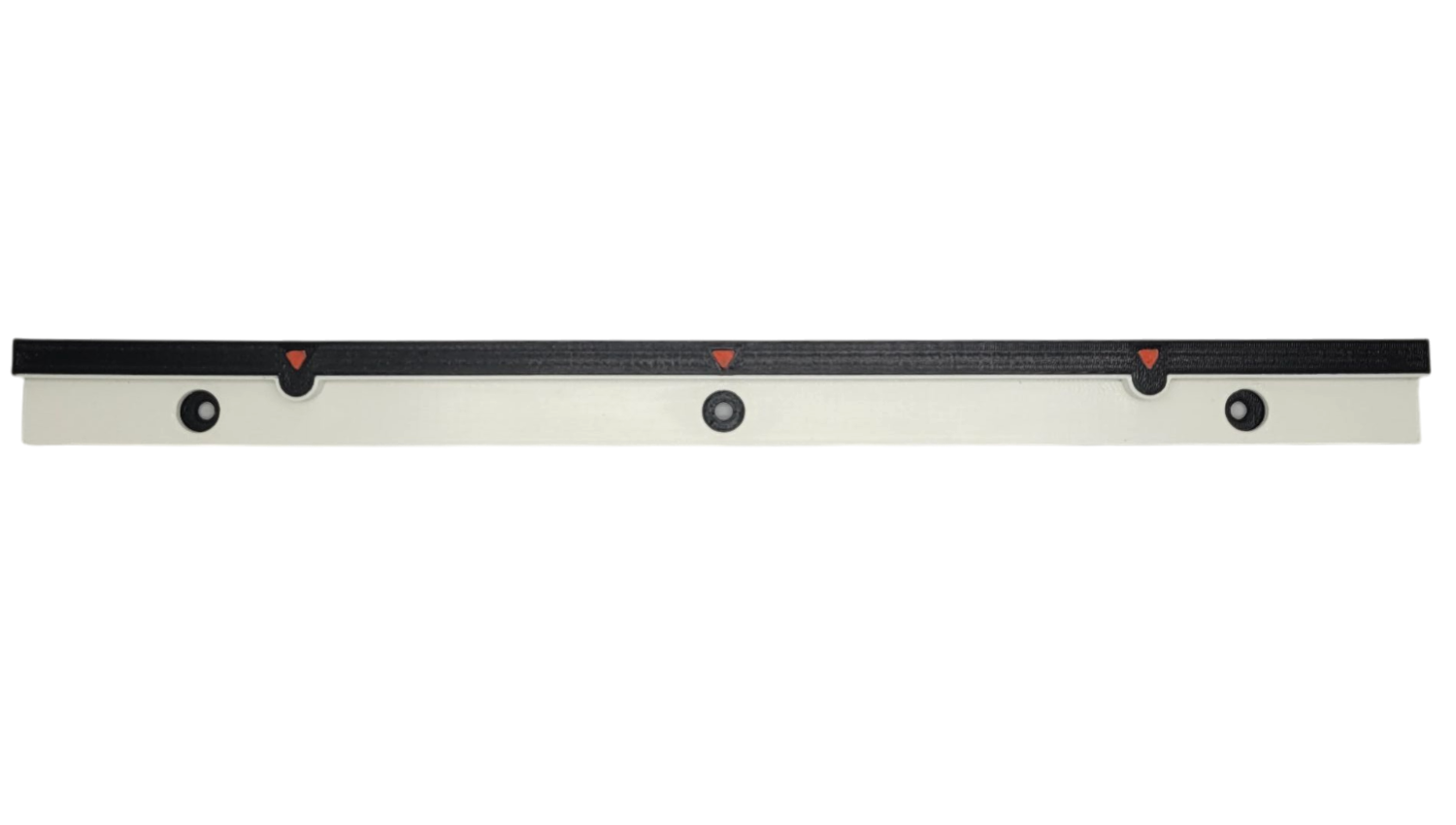
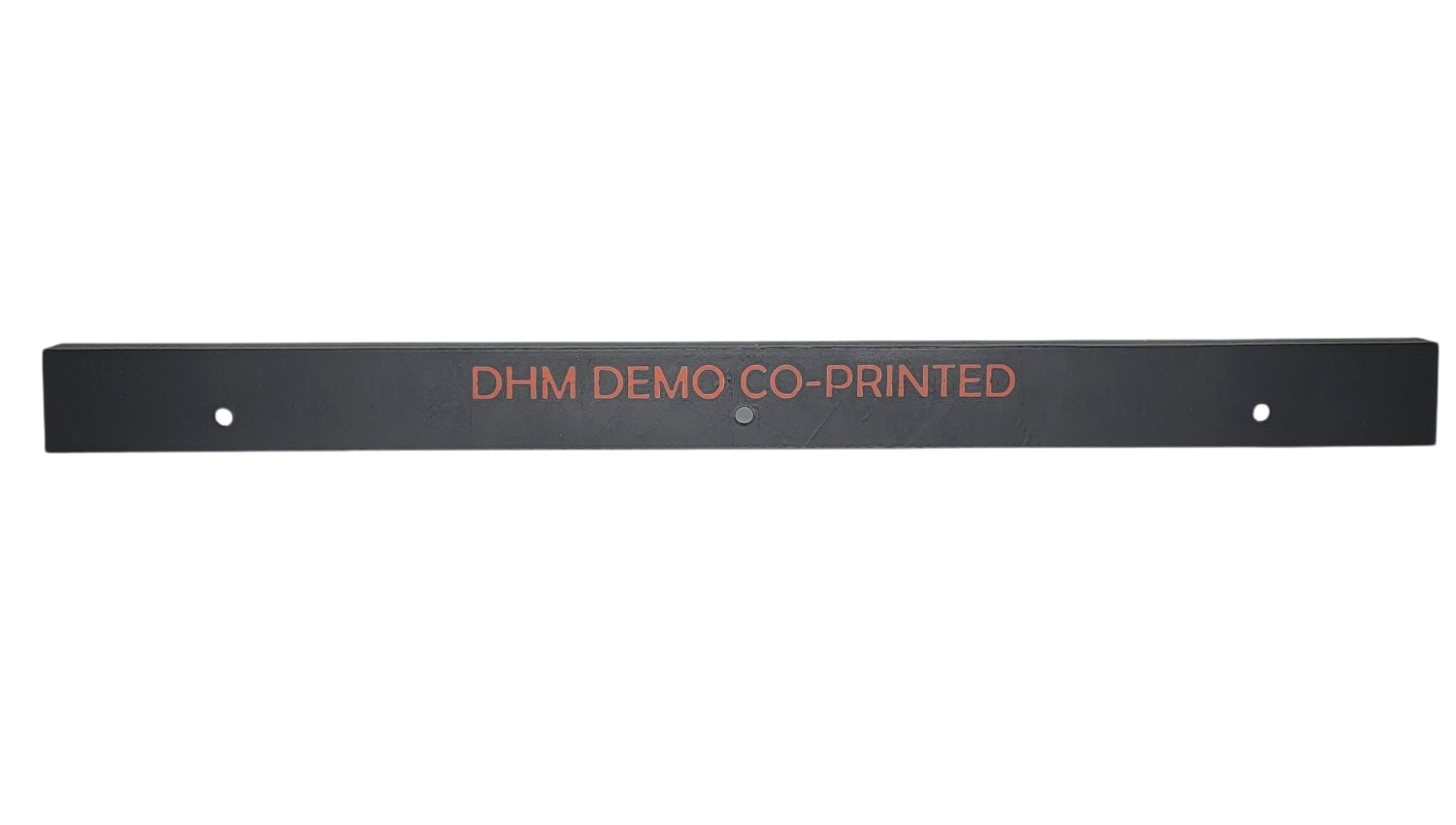
Co-printed Gauge
Selected Materials: ASA, ABS ESD, TPU Shore 80A
Application Field: Industry, Automation
Part Features:
The component is a multilayer co-printed reference part, designed to combine multiple functions into a single piece:
- ASA for integrating identification markings directly on the part.
- ABS ESD as the structural base, ensuring both strength and antistatic properties.
- TPU Shore 80A for the contact surface, soft and elastic to avoid damaging the components it interacts with.
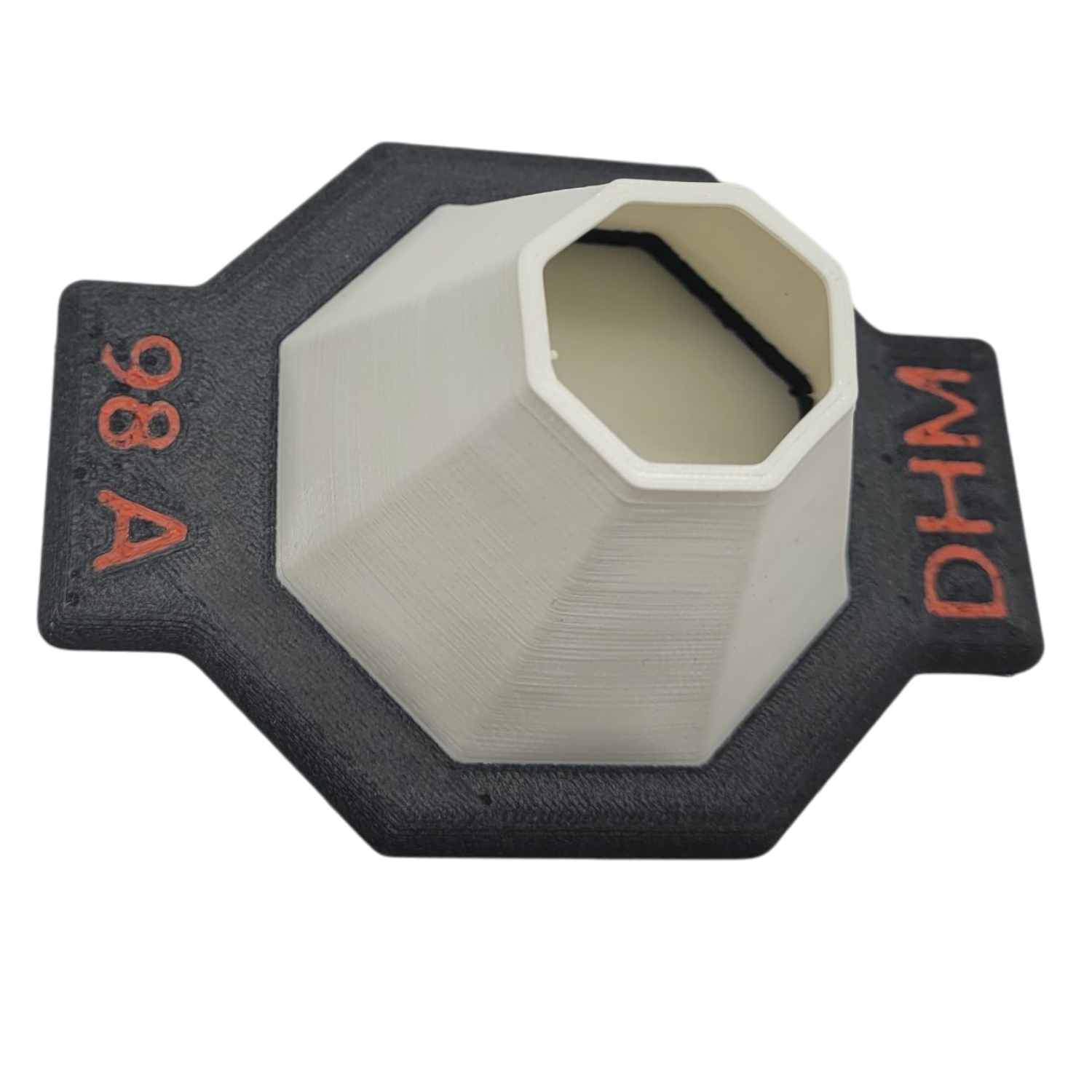
Co-printed example
Selected Materials: ASA, PA CF, TPU Shore 98A
Application Field: Demo
Part Features:
This component is a multimaterial co-printed part, designed to demonstrate the possibility of integrating rigid and flexible materials in a single piece, showcasing the versatility of both the technology and the materials used.
- ASA is used for precise identification markings, for demonstration purposes.
- PA CF (Carbon Fiber Reinforced Polyamide) is employed as the structural base, chosen for its high stiffness, mechanical strength, and light weight, providing solid support to the other integrated elements.
- TPU Shore 98A is used to create the octagonal-based pyramid, demonstrating the flexibility and elasticity of the material even on complex shapes, while ensuring good surface durability.
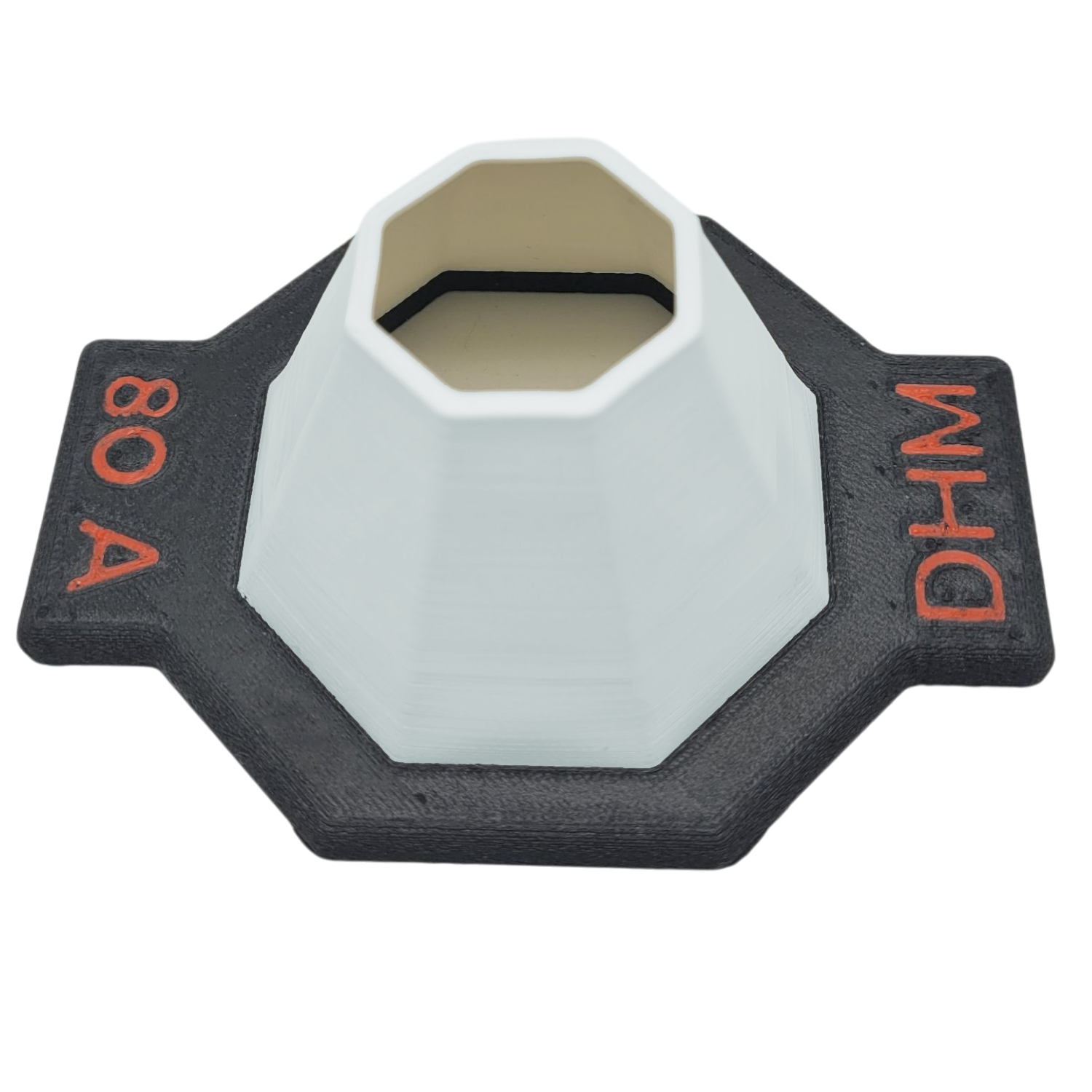
Co-printed example
Selected Materials: ASA, PA CF, TPU Shore 80A
Application Field: Technical Demonstration (Demo)
Part Description:
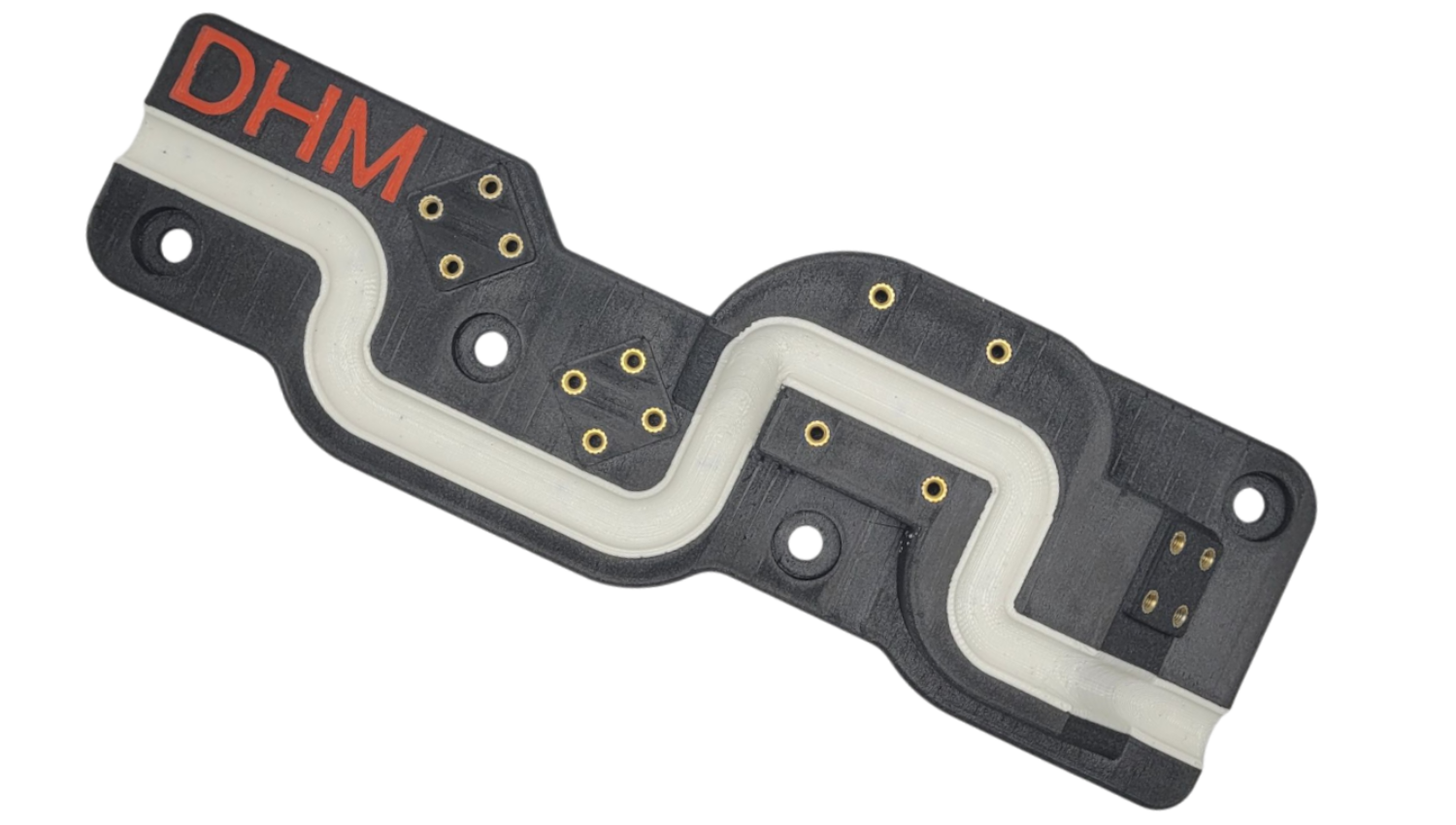
This component is an example of multimaterial co-printing, designed to showcase the potential of combining rigid and flexible materials within a single object.
- ASA is used to create identification markings directly on the part, ensuring a clean aesthetic finish and good resistance to external agents.
- PA CF (Carbon Fiber Reinforced Polyamide) forms the structural core, providing high stiffness, strength, and light weight, ideal for supporting the other integrated materials.
- TPU Shore 80A is used to create the octagonal-based pyramid, a flexible area designed to demonstrate the softness, flexibility, and elasticity of the material, while still offering good mechanical resistance.
Co-printed Jig
Selected Materials: ASA, PC PBT GF, TPU Shore 80A
Application Field: Industry, Automation
Part Features:
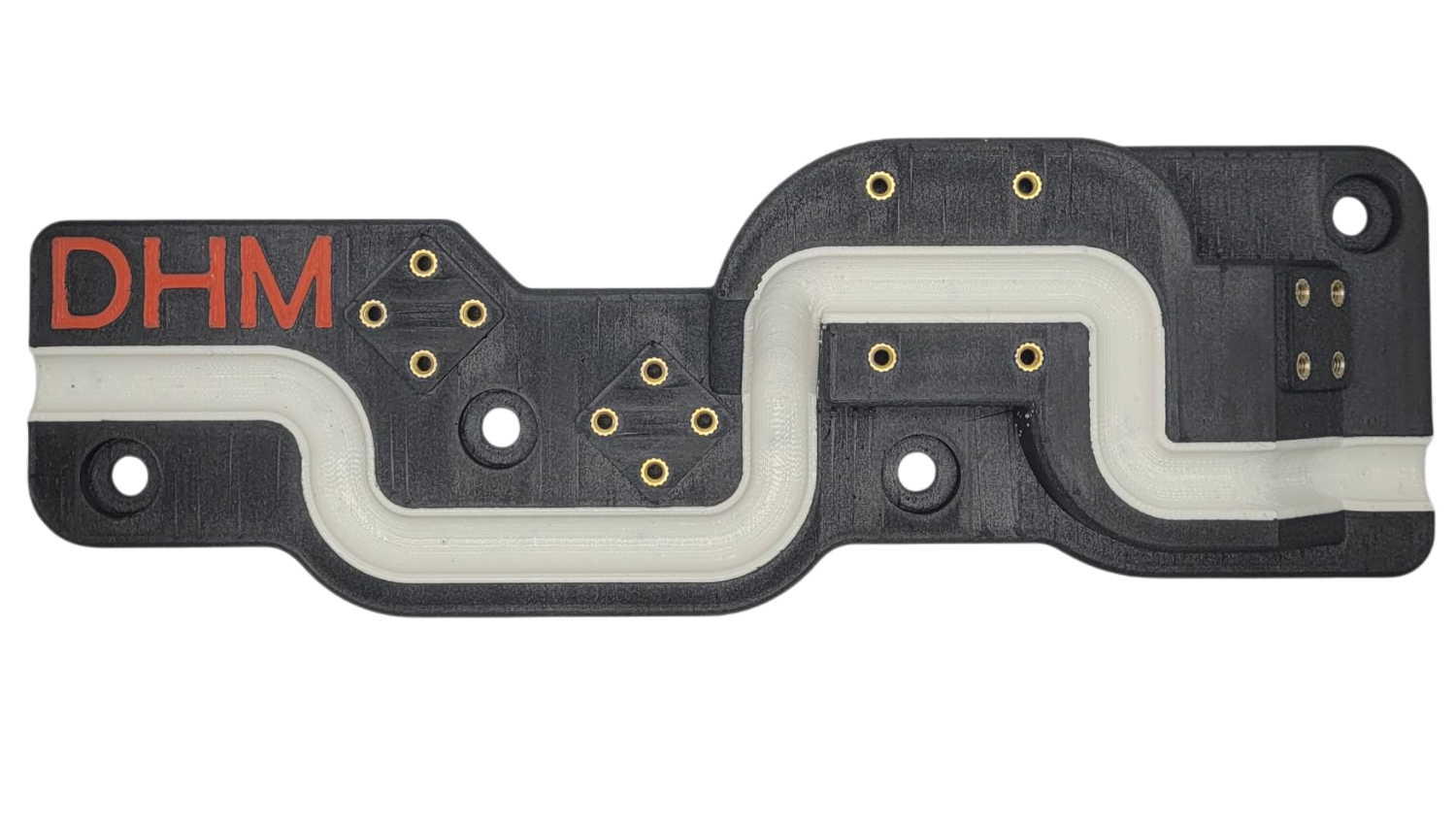
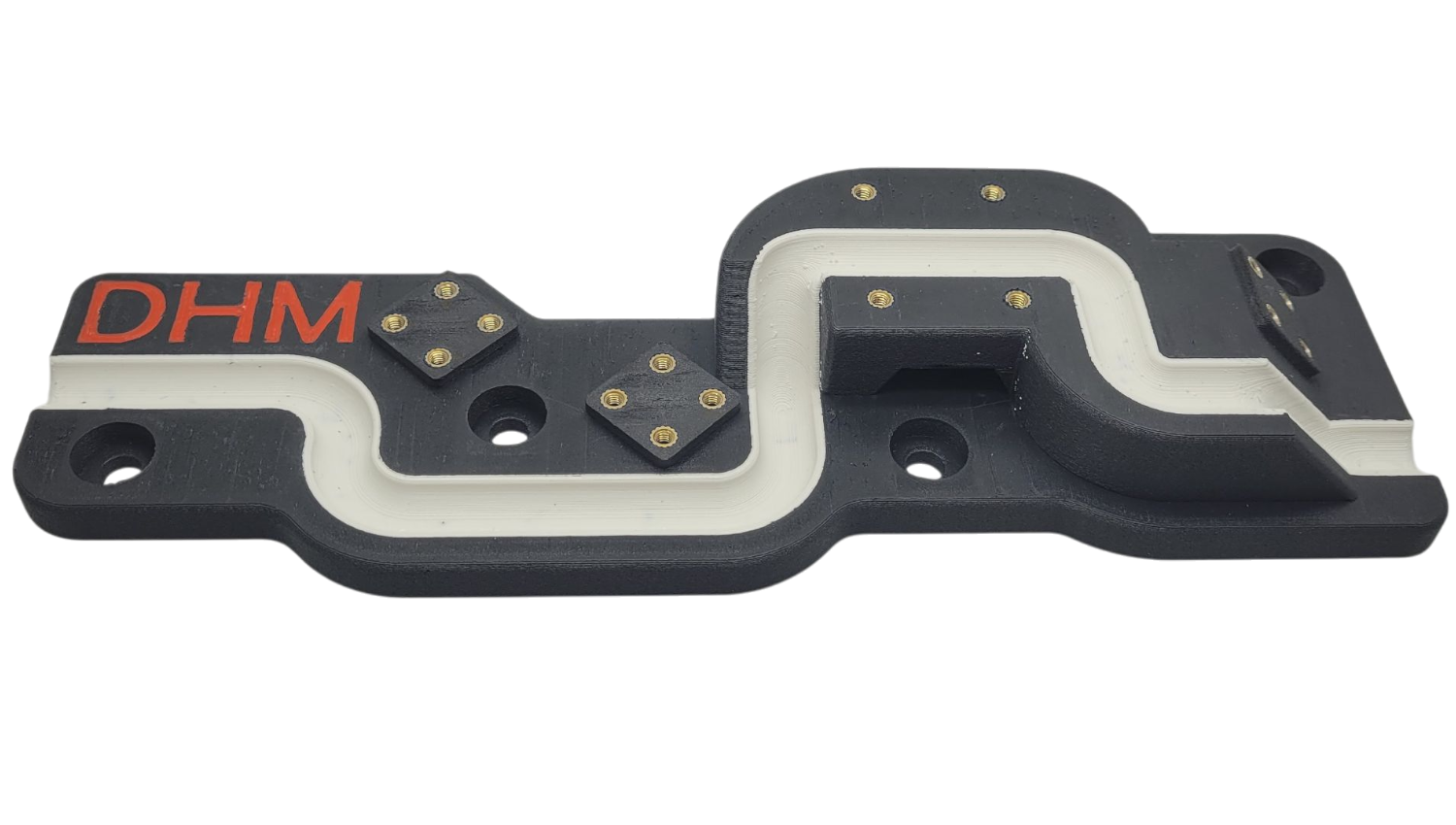
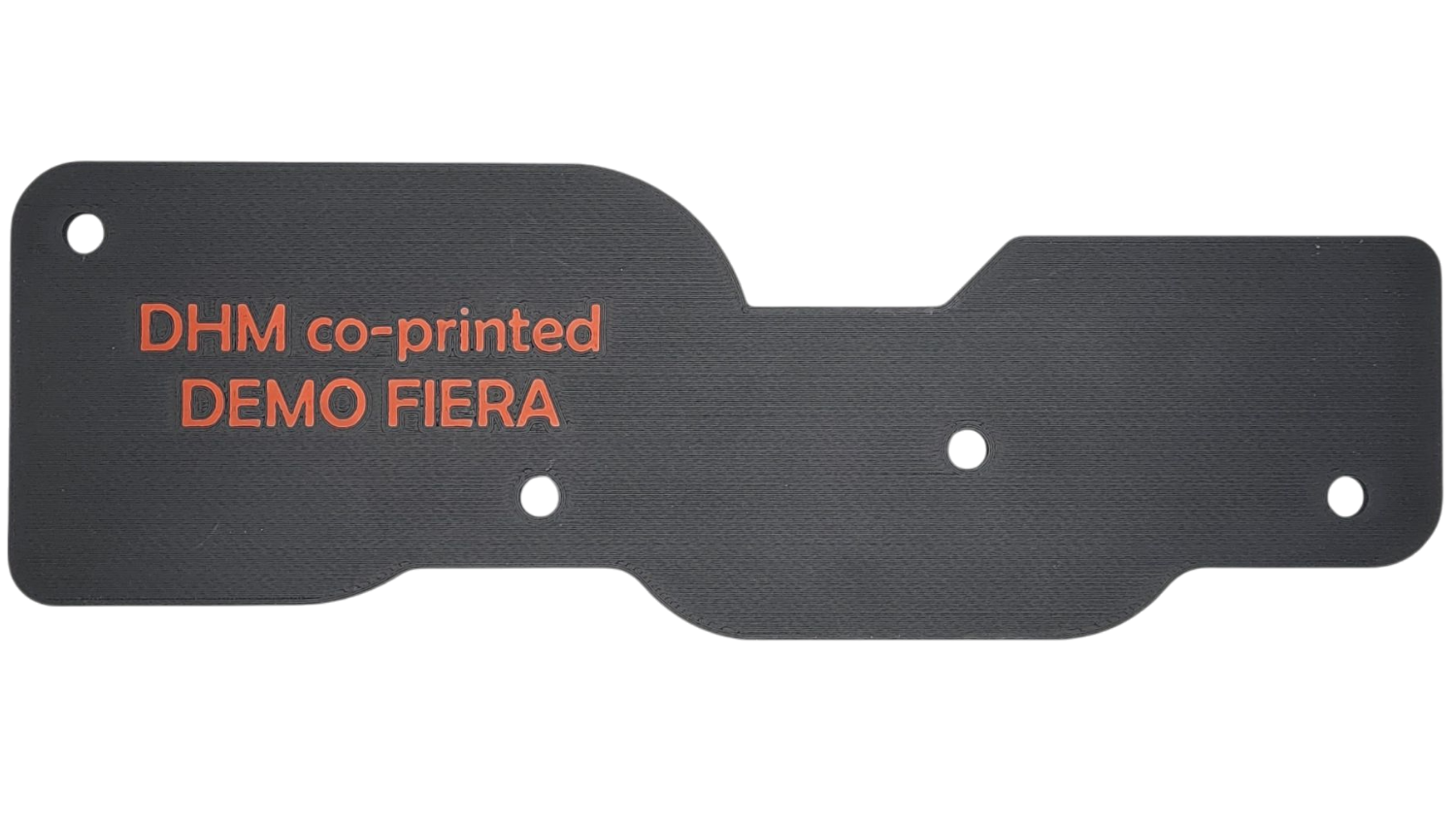
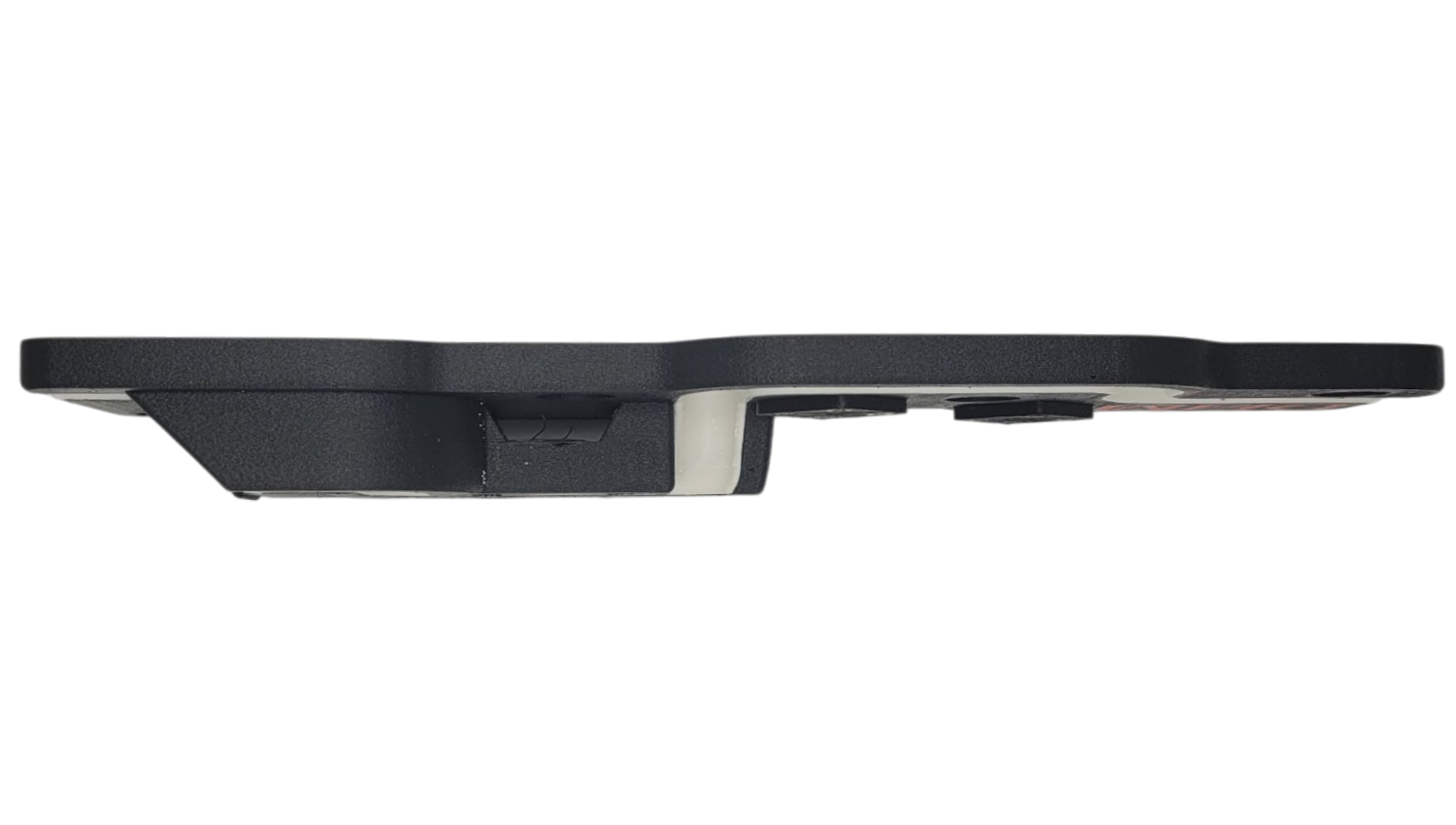
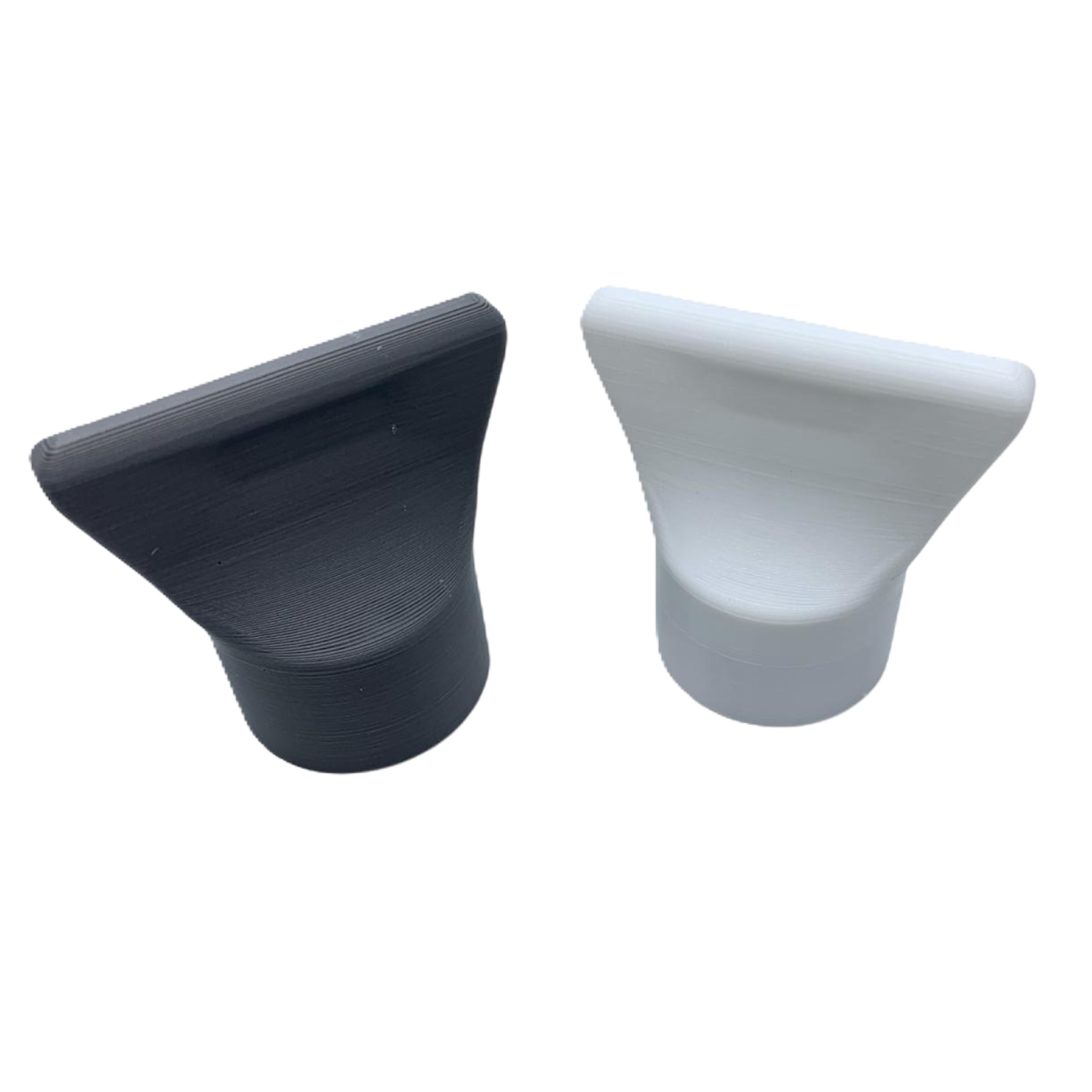
The component is a multimaterial co-printed jig, designed to integrate multiple functions within a single element.
- ASA is used to create identification markings, ensuring durability, resistance to external agents, and a clean aesthetic finish.
- PC PBT GF (polycarbonate + glass fiber reinforced polybutylene terephthalate) is employed as the main structural material, providing high strength, dimensional stability, and secure fastening capability for other parts.
- TPU Shore 80A is applied on the contact surfaces, offering a soft and elastic layer to avoid damaging components during use and to ensure effective grip.
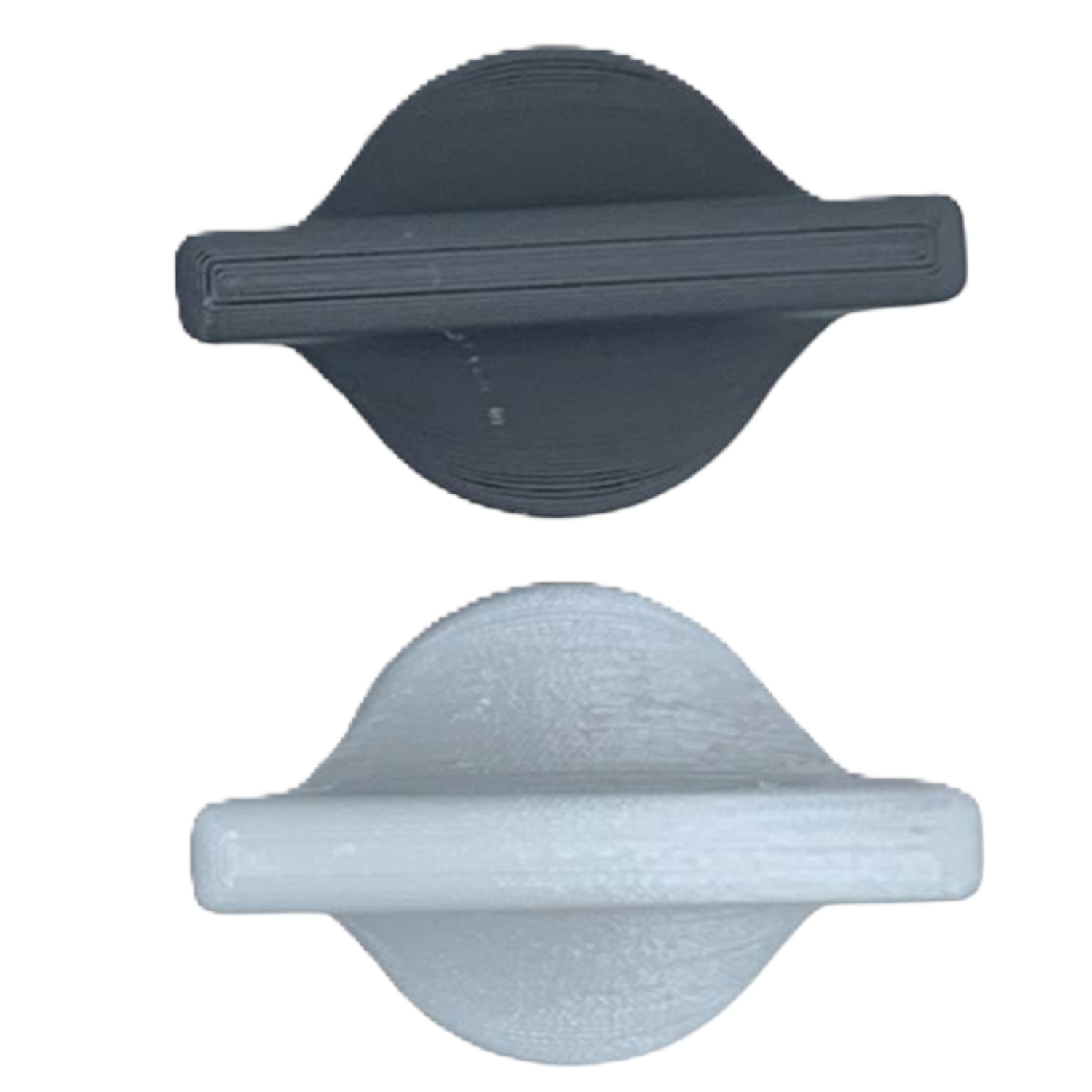
Co-printed Fastening Pin
Selected Materials: ASA, TPU Shore 80A
Application Field: Industry, Automation
Part Features:
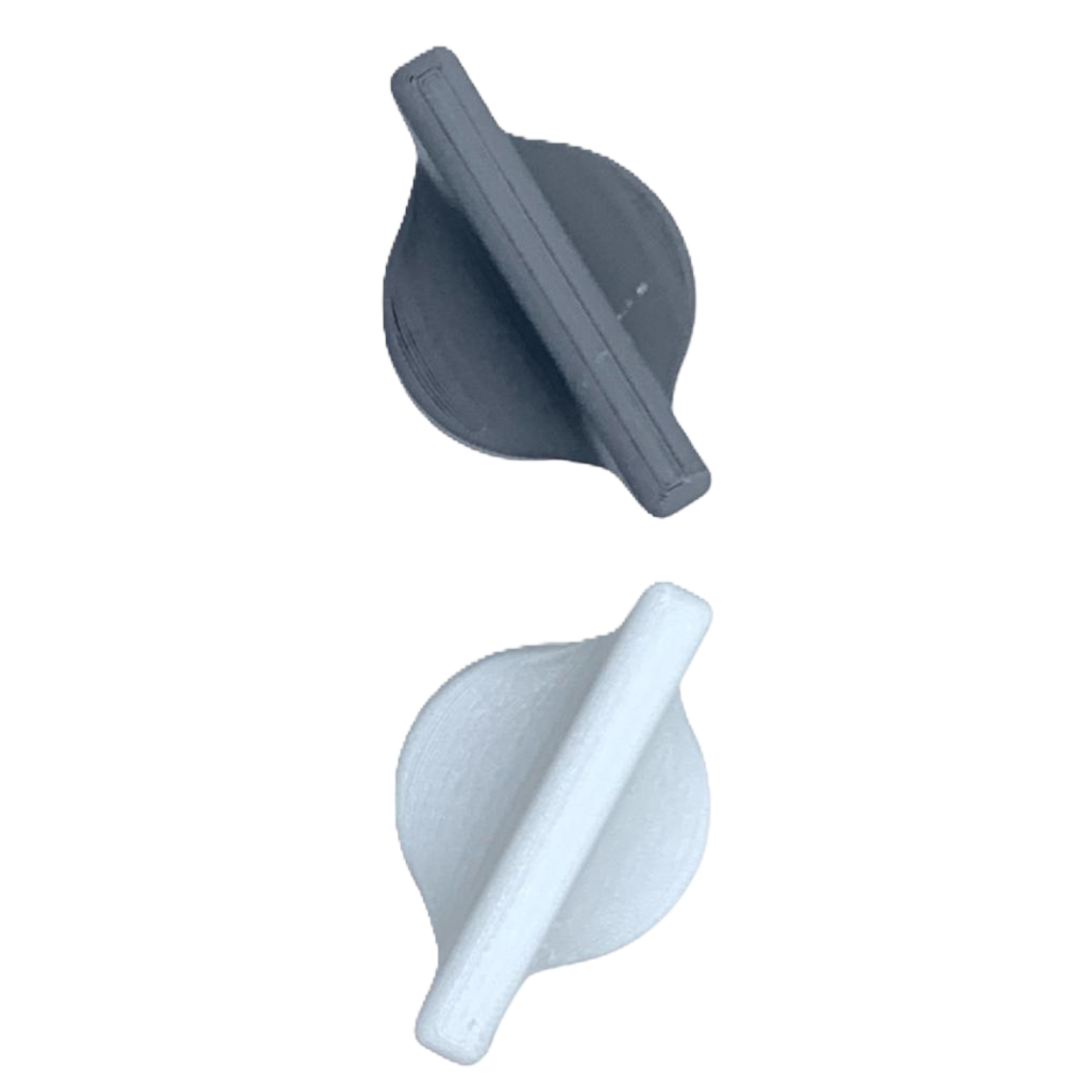
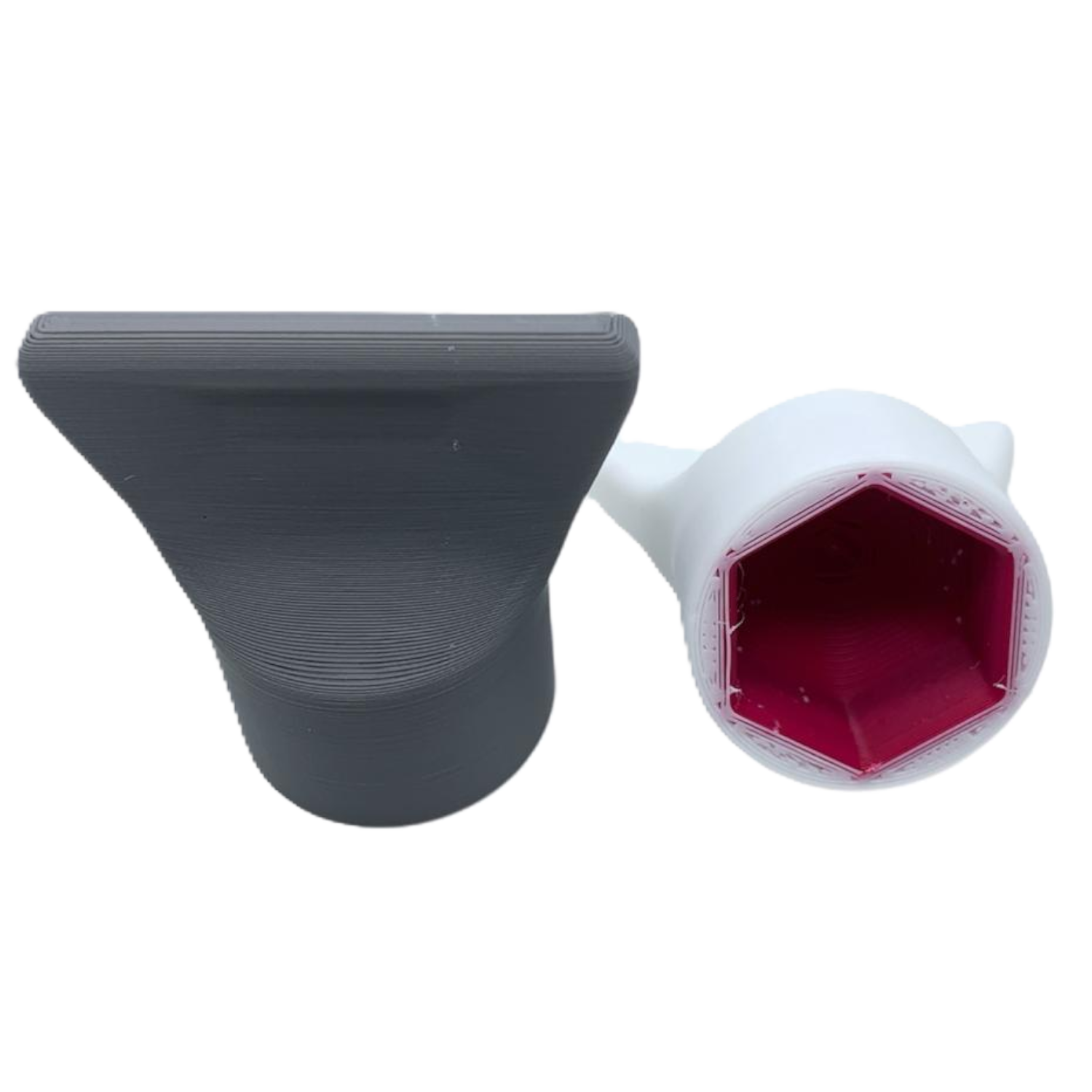
The component is a multimaterial co-printed fastening pin, designed to ensure mechanical strength, easy assembly, and component protection.
- ASA forms the structural part of the pin, providing rigidity, resistance to weathering and chemicals, and allowing for integrated markings or identification codes.
- TPU Shore 80A is used to coat or create flexible contact areas, enabling secure coupling, vibration damping, and protection of components during fastening.
Functions:
- Rigidity and strength for the fastening section (ASA).
- Flexibility and grip for the contact areas (TPU), preventing damage and ensuring stable and safe assembly.
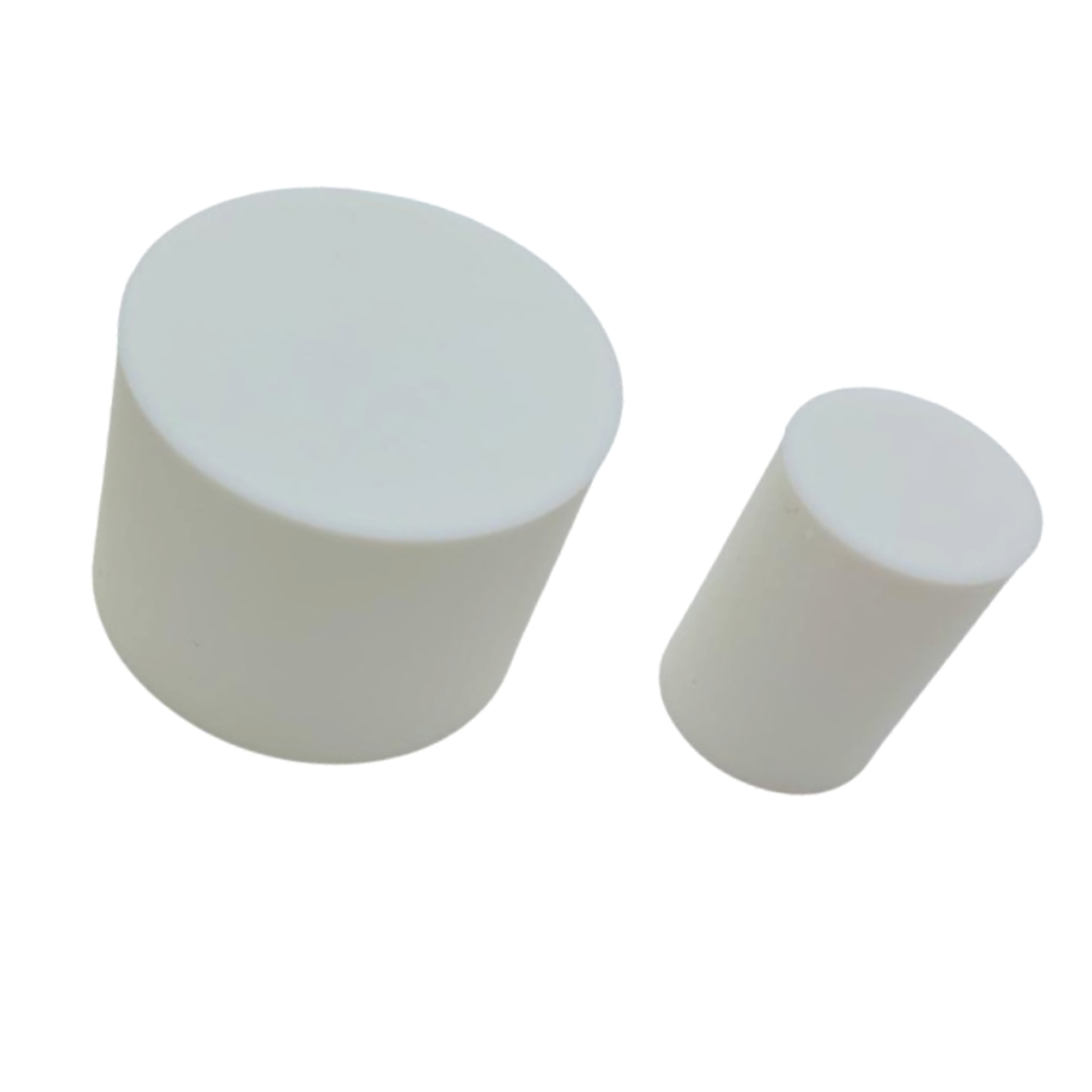
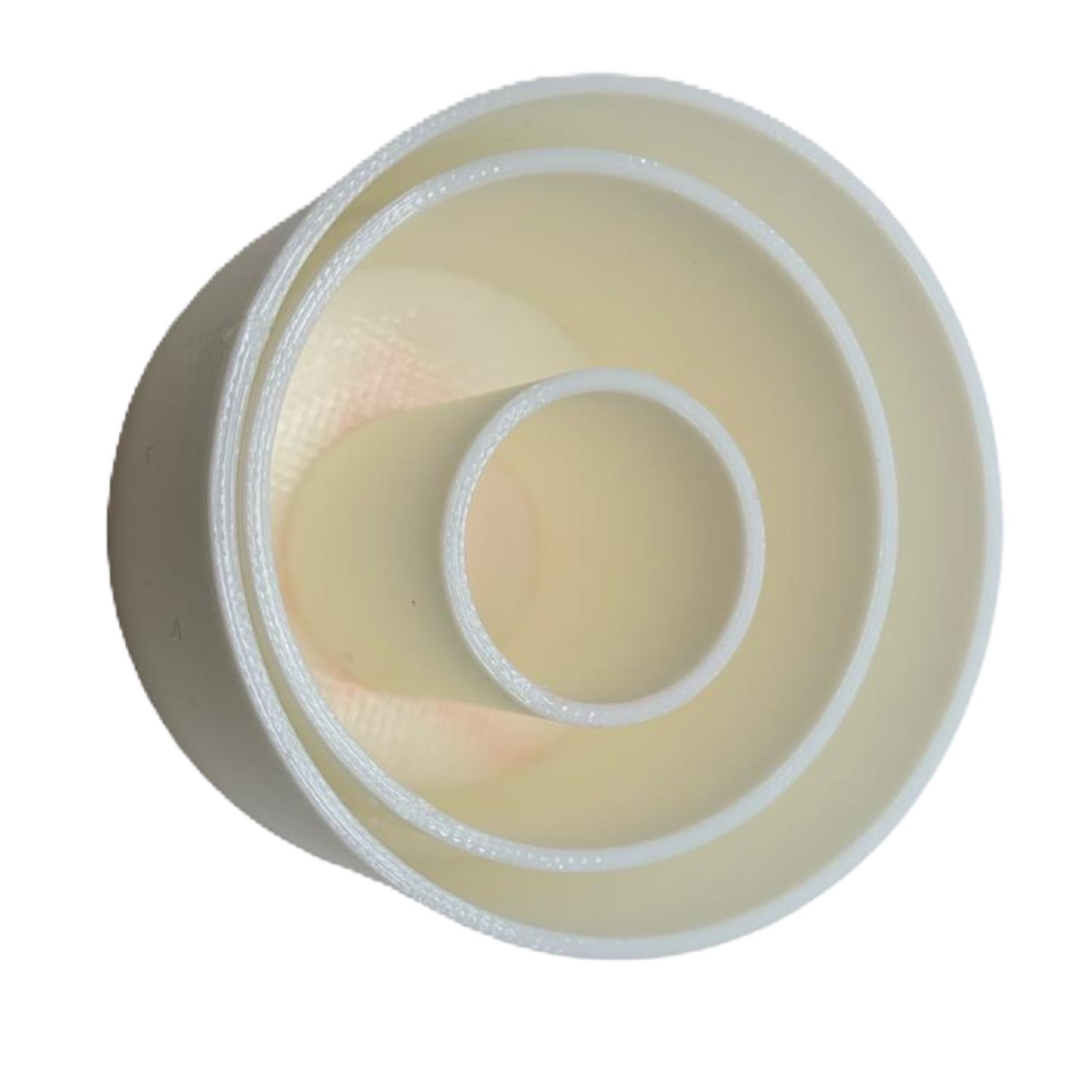
Protective TPU Covers
Selected Material: TPU Shore 70A
Application Field: Protective TPU Covers for Mechanical Devices
Part Description:
This component is an example of a protective cover made entirely of TPU Shore 70A, available in various diameters to fit a wide range of applications and components.
These covers are designed to protect surfaces, pins, mechanical or electronic elements from impacts, dust, chemicals, and moisture, while also offering flexibility and mechanical strength.
Key Features:
- TPU Shore 70A combines elasticity and toughness, ensuring a flexible yet durable cover, suitable even for demanding industrial environments.
- Provides precise fit without additional fastening, excellent resistance to wear, oils, and chemicals, and is available in different diameters to accommodate various component sizes.
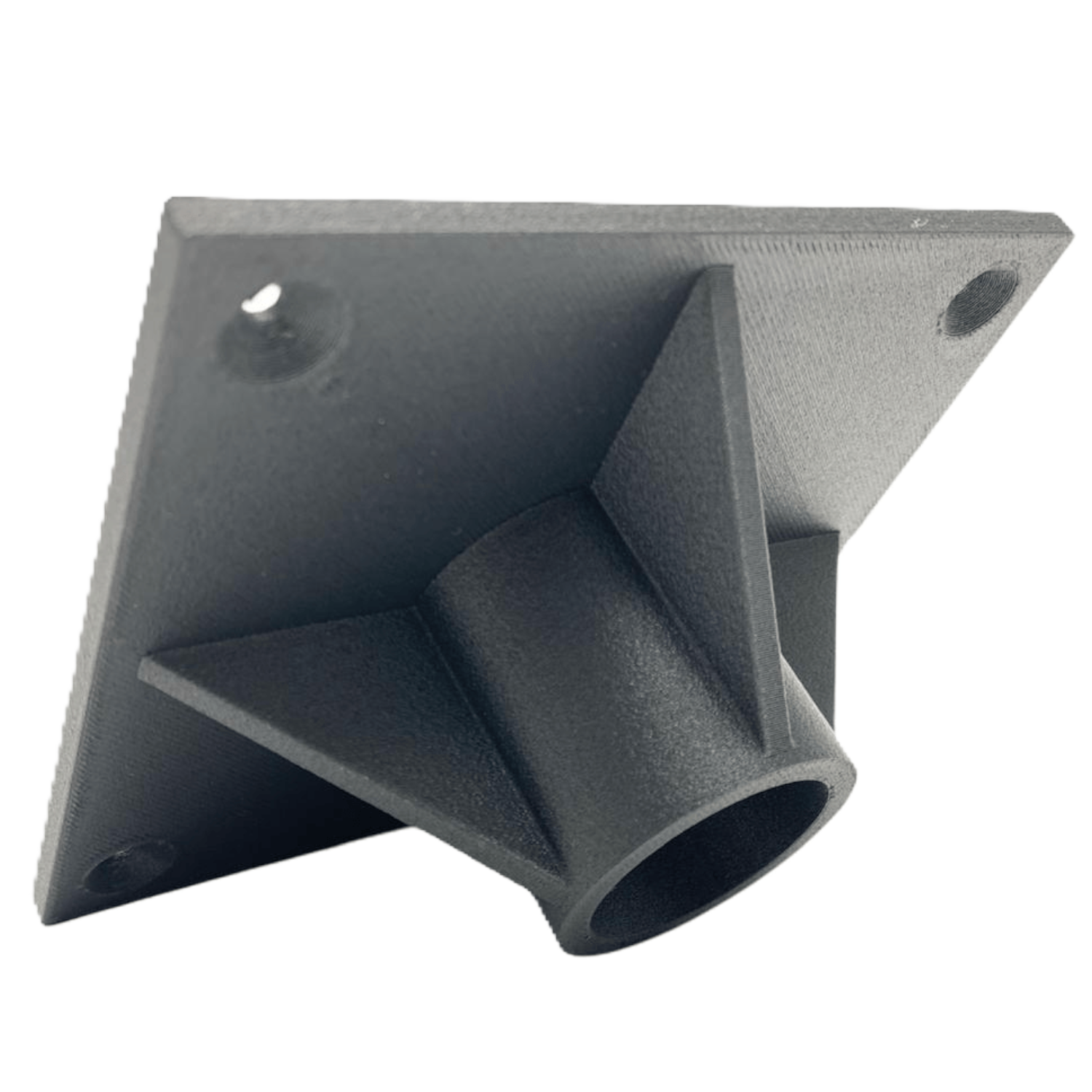
Monitor Support for CNC Machine
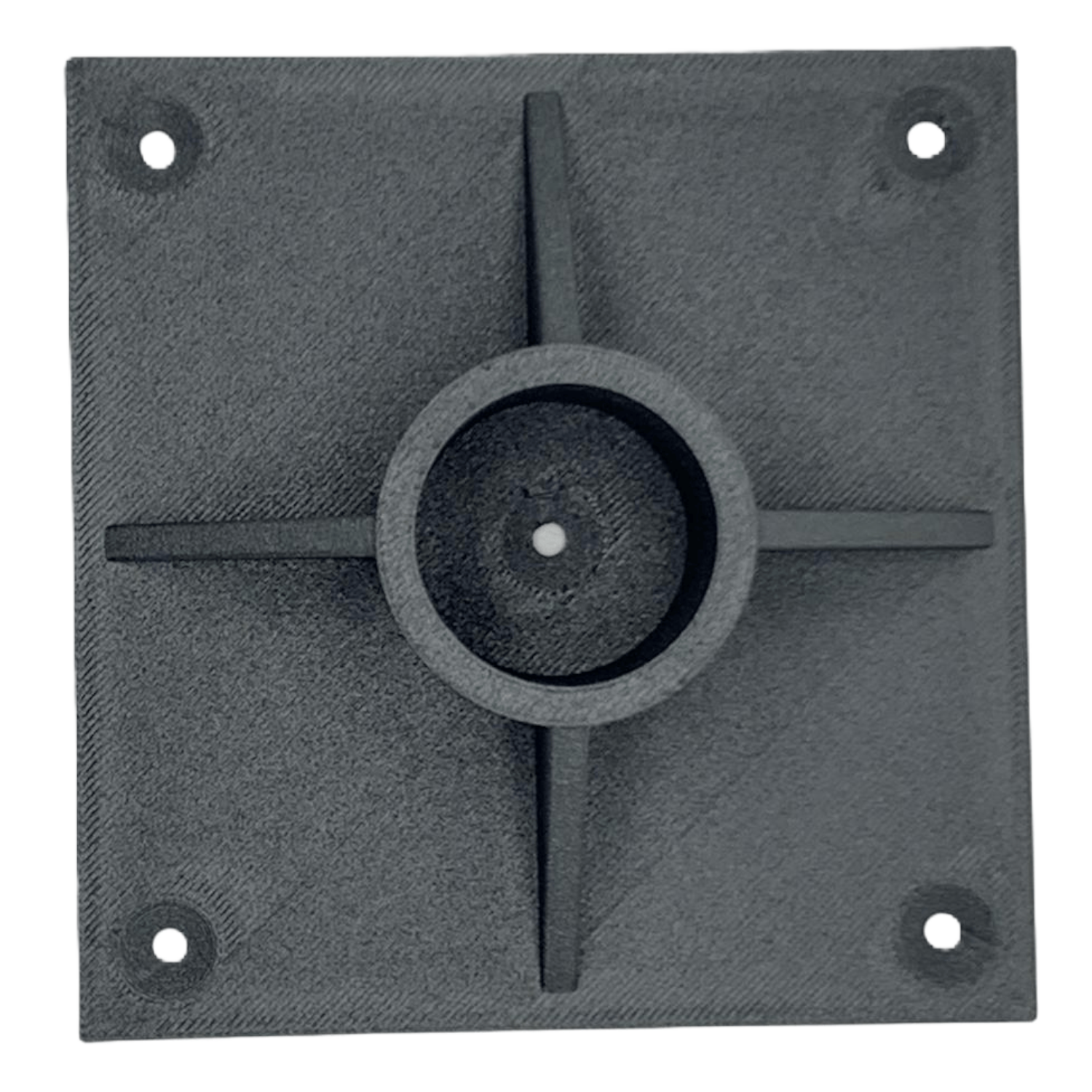
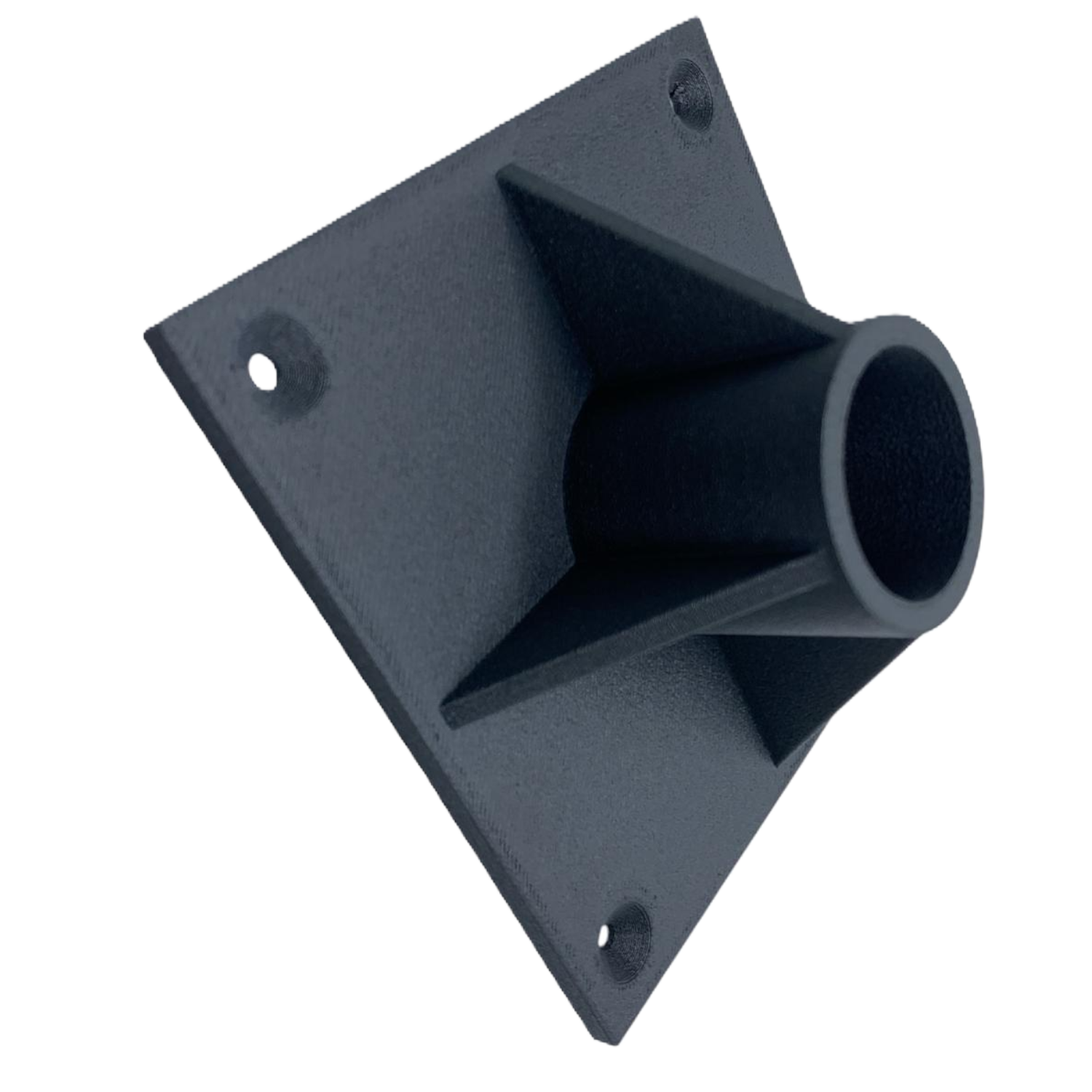
Material: PA CF (Carbon Fiber Reinforced Nylon)
Application Field: Industry, Automation
Part Features:
The component is designed to be rigid, impact and vibration resistant, and dimensionally stable.
Why PA CF?
This material offers high stiffness and mechanical strength, low thermal deformation, excellent resistance to impacts and vibrations, and reduced weight, making it ideal for demanding industrial environments.
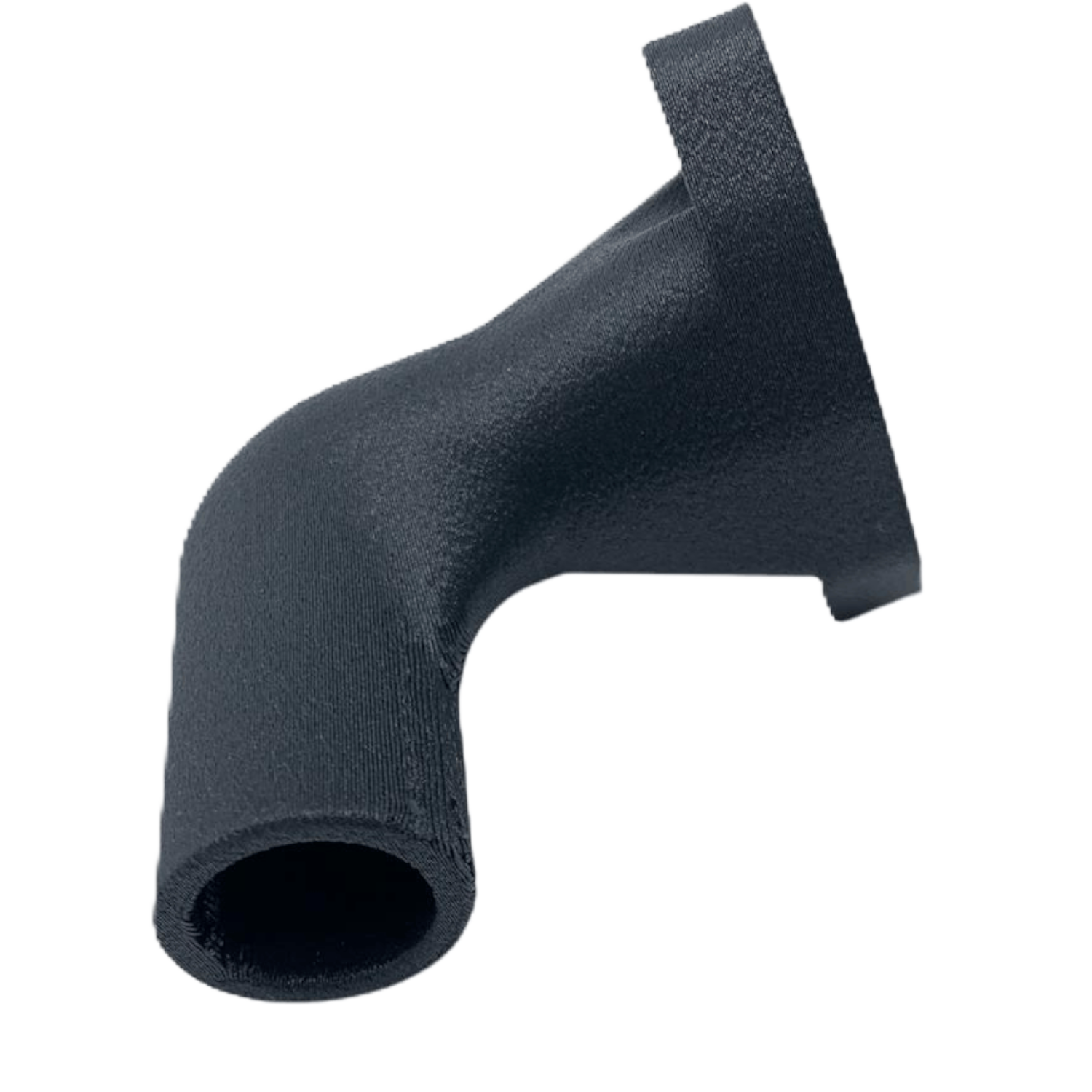
Manifold
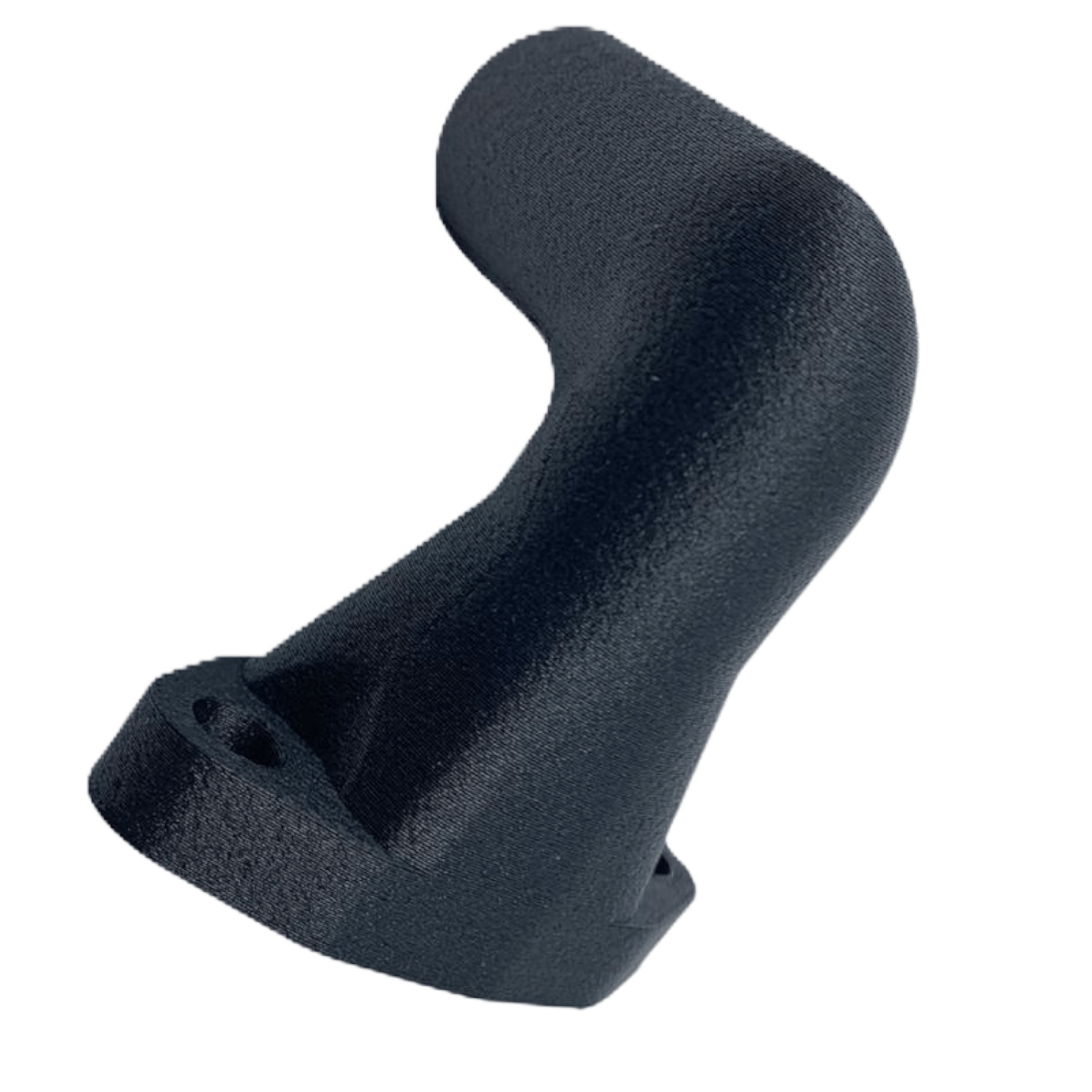
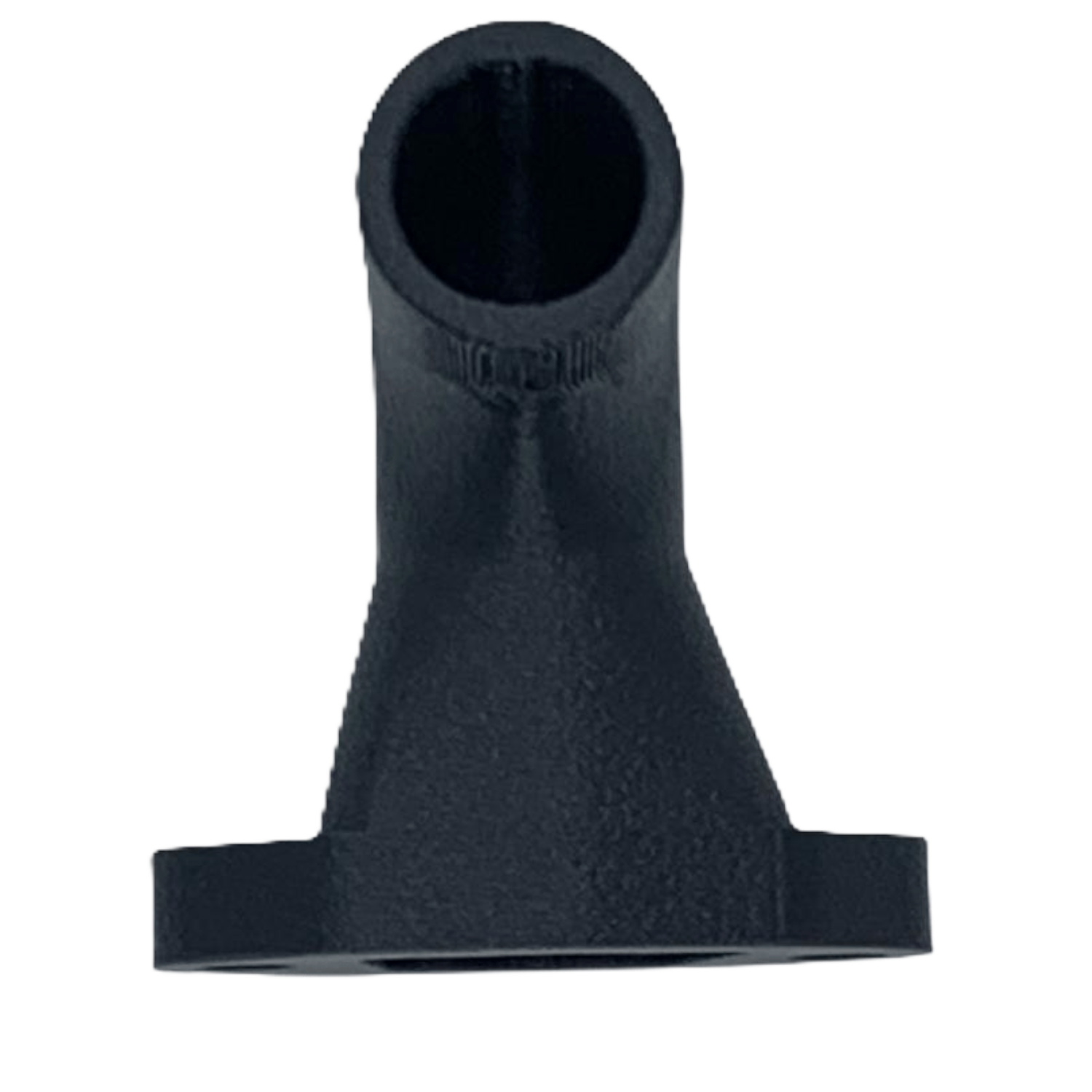
Material: PA CF (Carbon Fiber Reinforced Nylon)
Application Field: Automotive
Part Features:
The component is designed to withstand pressure, high temperatures, and aggressive fluids.
Why PA CF?
This material provides high mechanical and thermal resistance, dimensional stability, chemical resistance, and low deformation, making it ideal for demanding automotive applications.
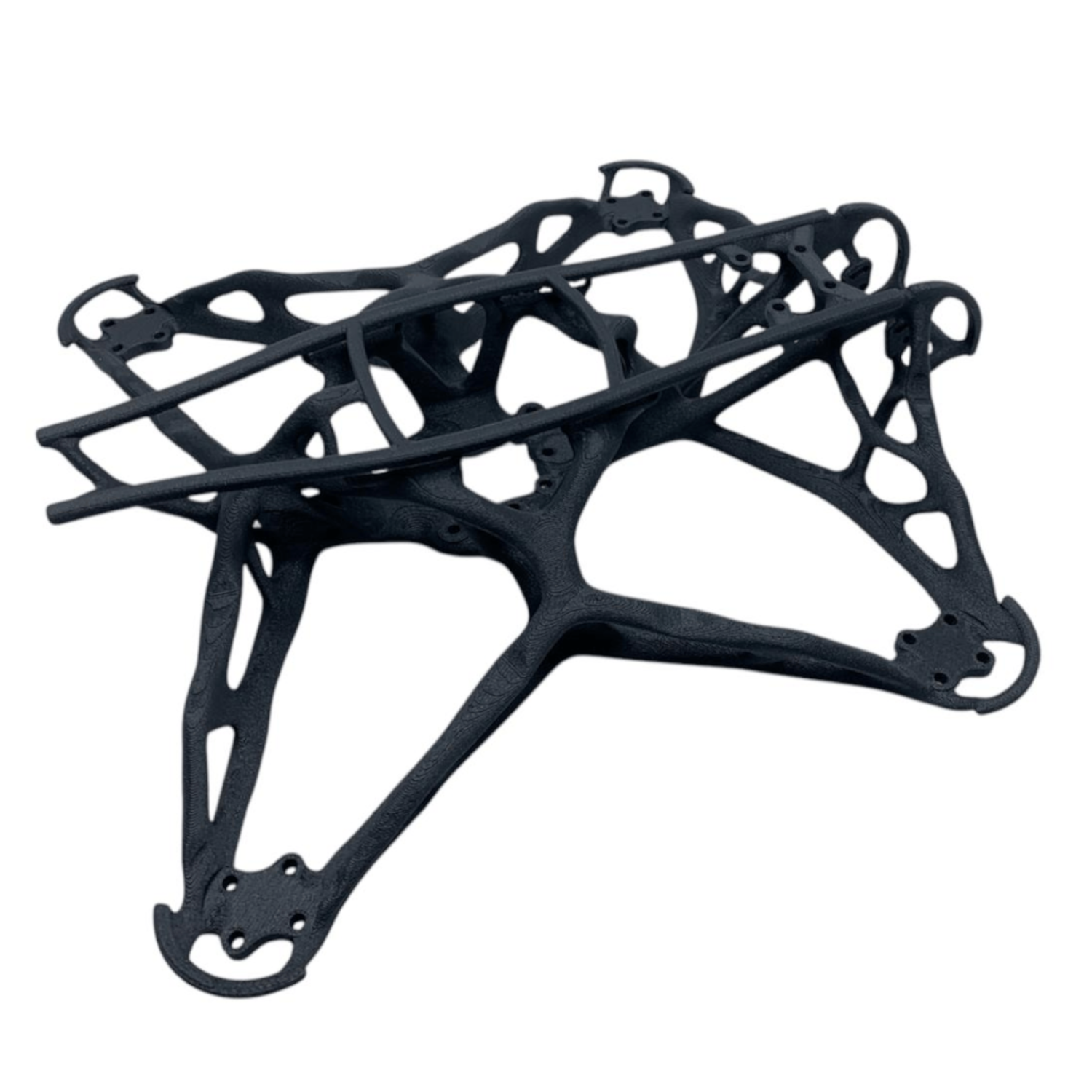
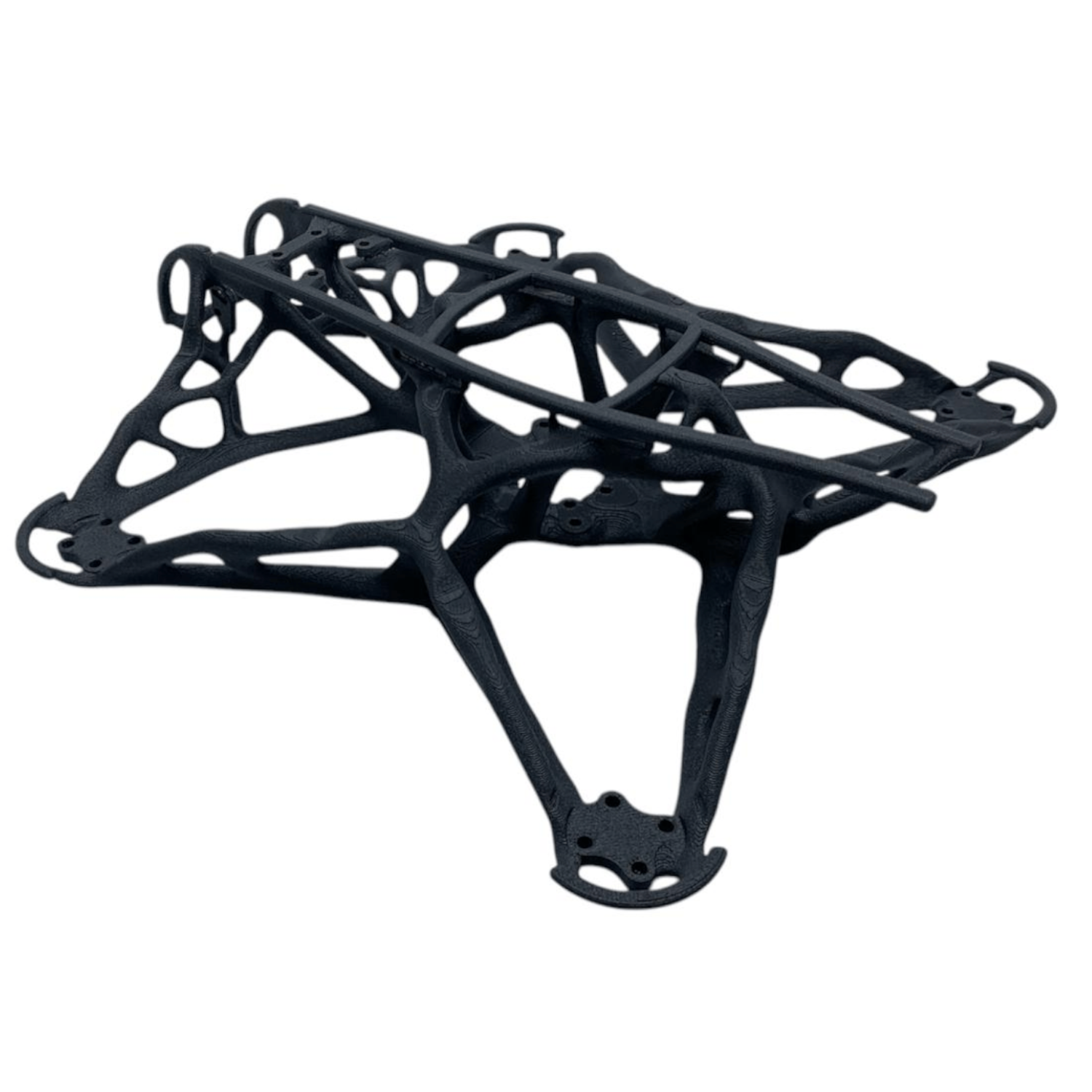
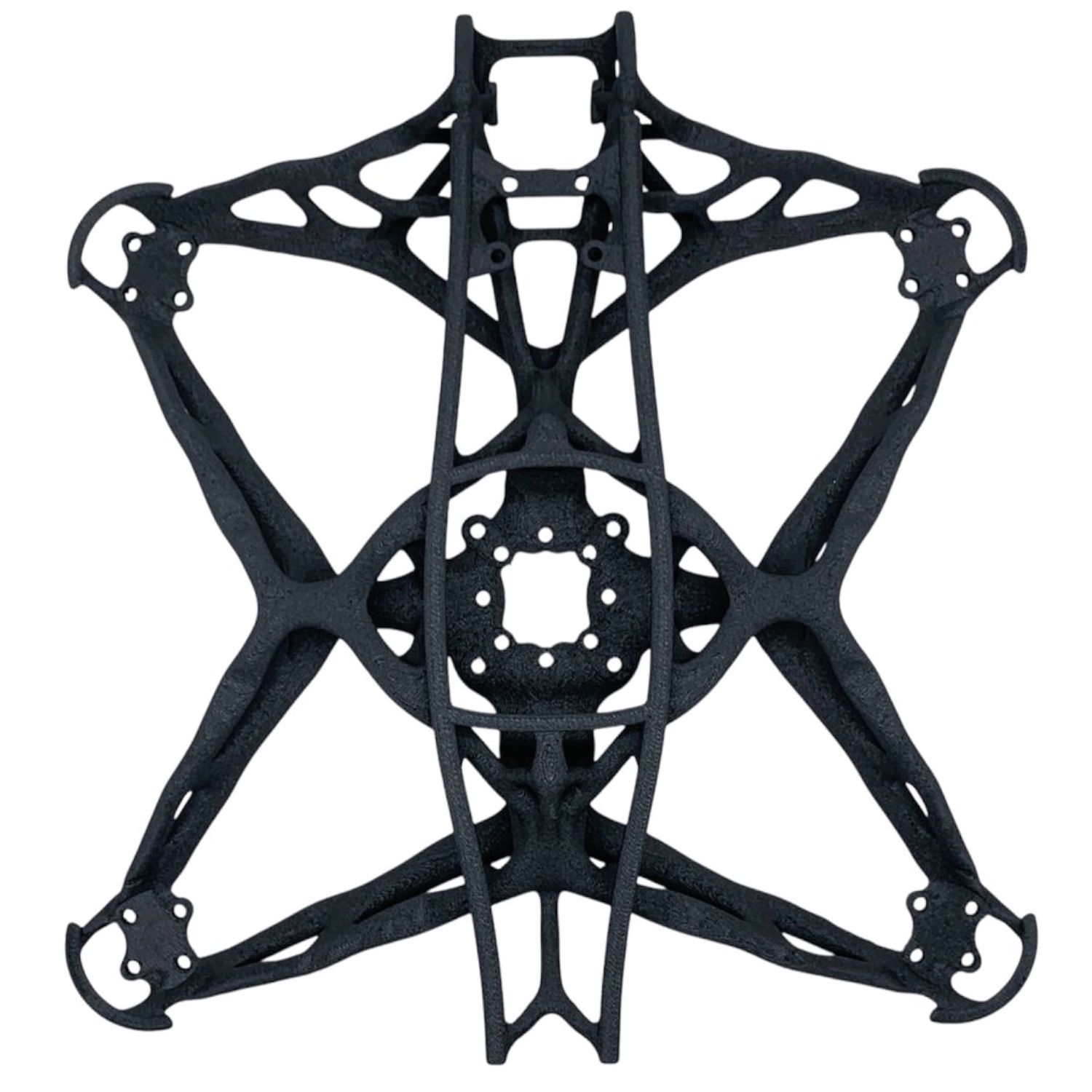
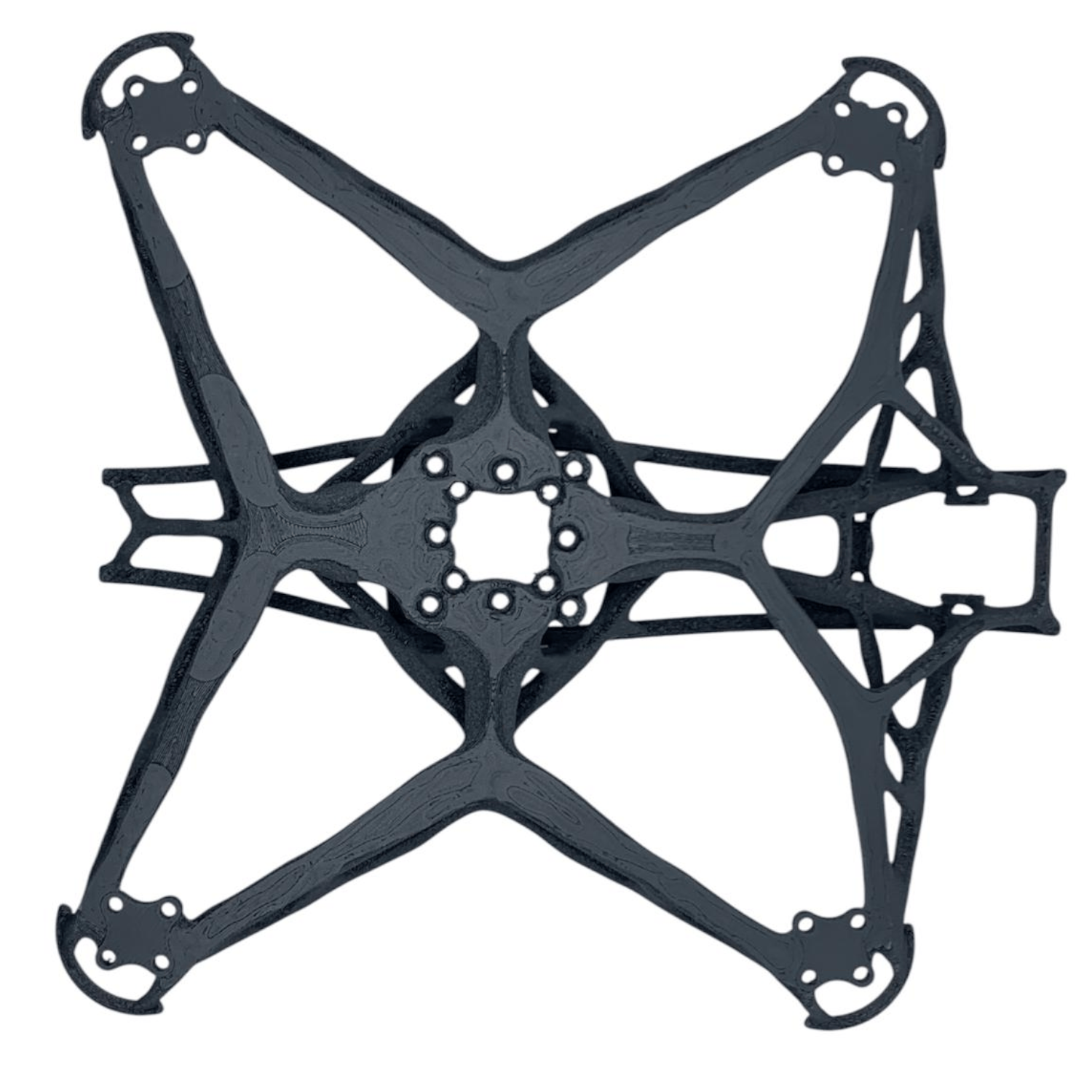
Drone Frame
Material: PC PBT GF (Polycarbonate + Glass Fiber Reinforced Polybutylene Terephthalate)
Application Field: Aerospace
Part Features:
The component is designed to be lightweight, impact-resistant, and structurally stable.
Why PC PBT GF?
This material offers excellent impact and weather resistance, high structural rigidity, low weight, and dimensional stability, making it ideal for aerospace applications where performance and reliability are critical.
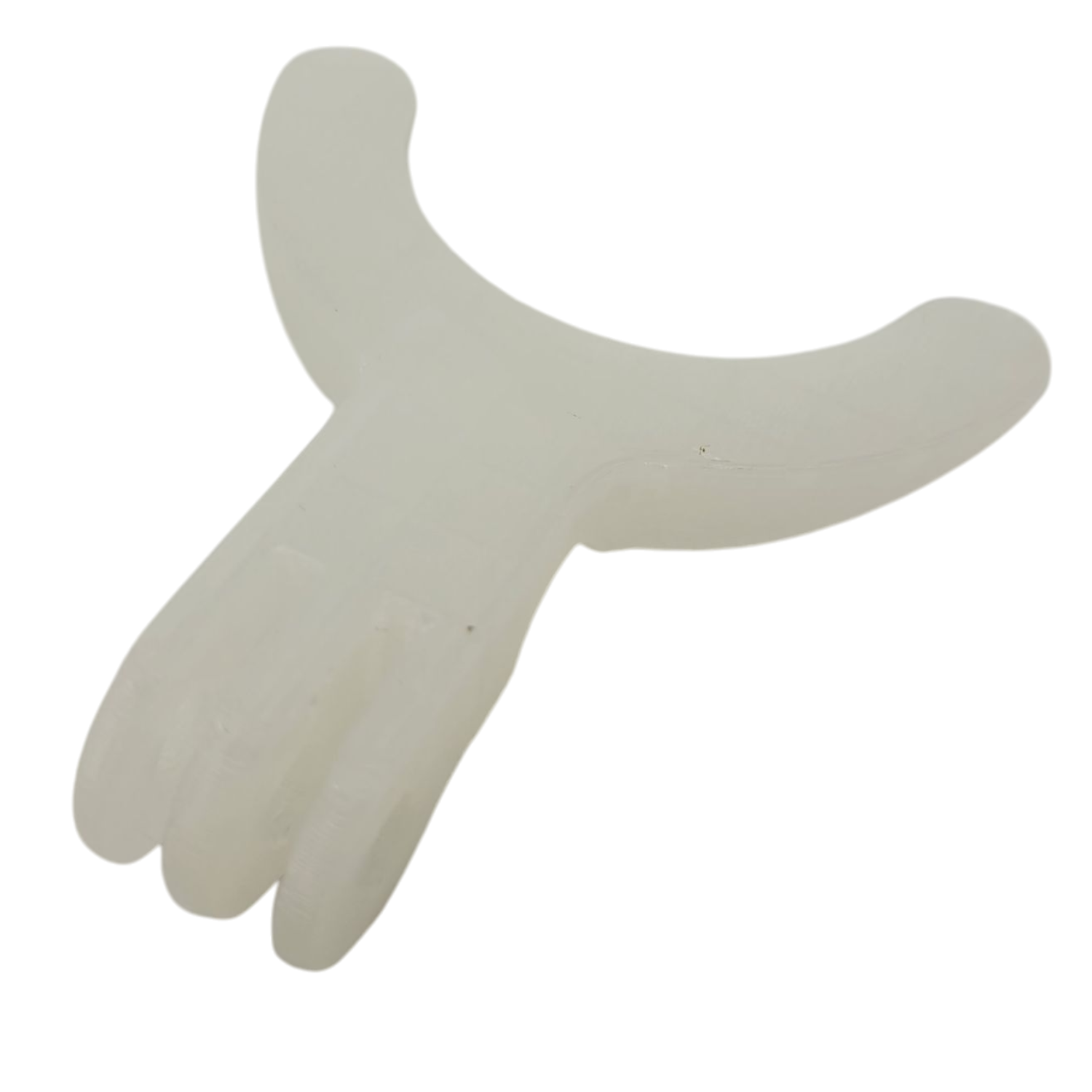
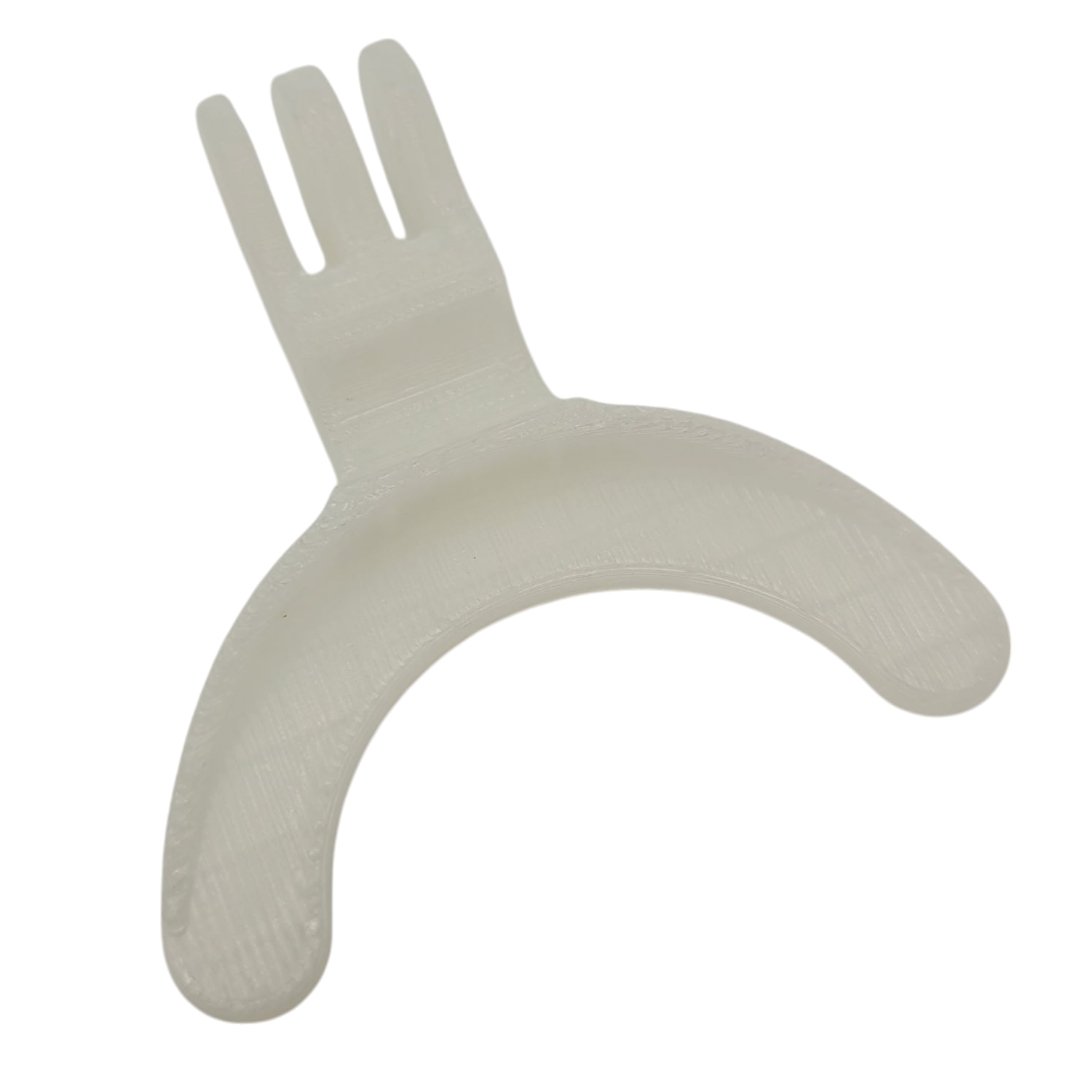
Camera Support
Material: PA (Polyamide)
Application Field: Electronics
Part Features:
The component is designed to be strong, lightweight, and resistant to vibrations and impacts.
Why PA?
This material provides good mechanical and wear resistance, dimensional stability, and low weight, making it suitable for electronic components that require durability and reliability.
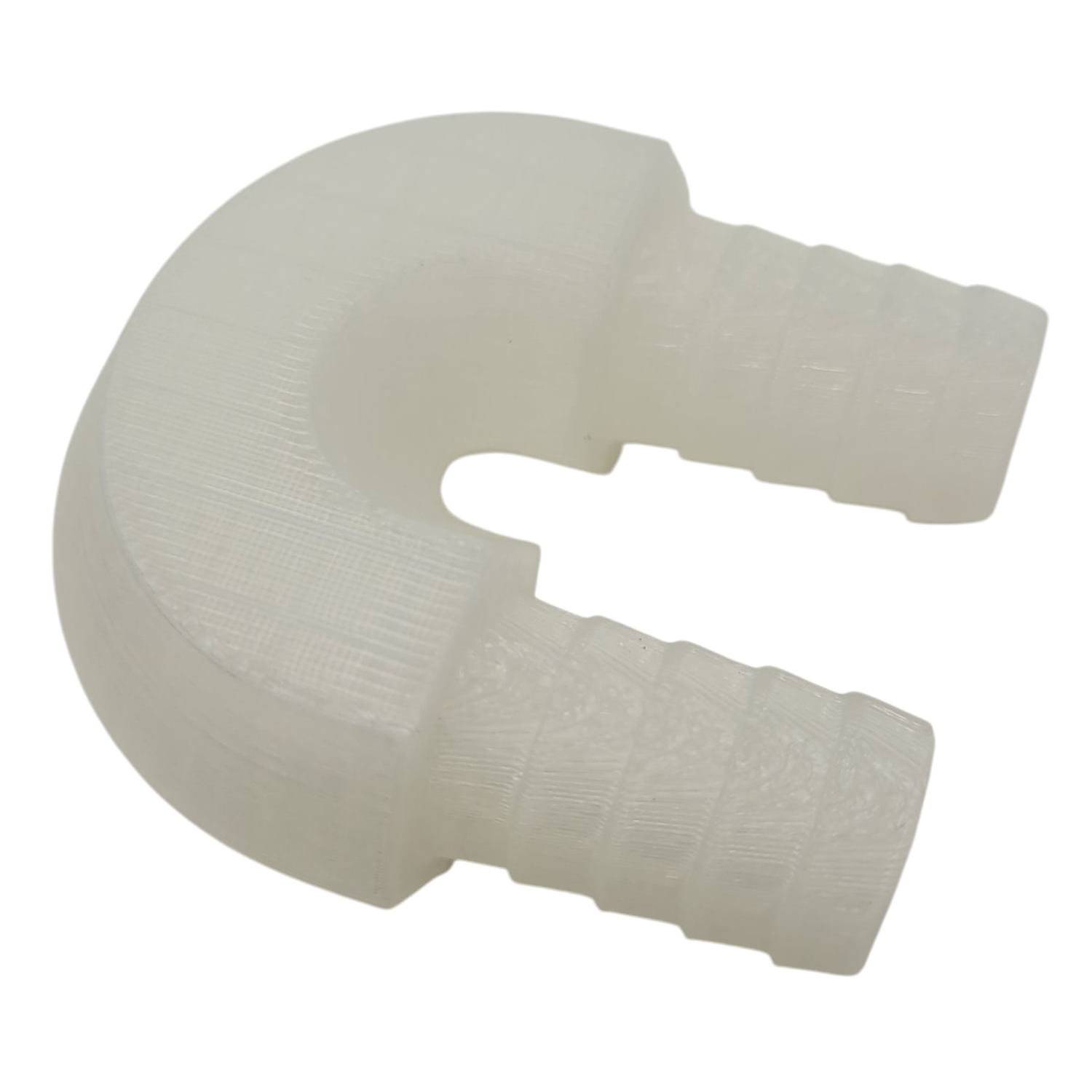
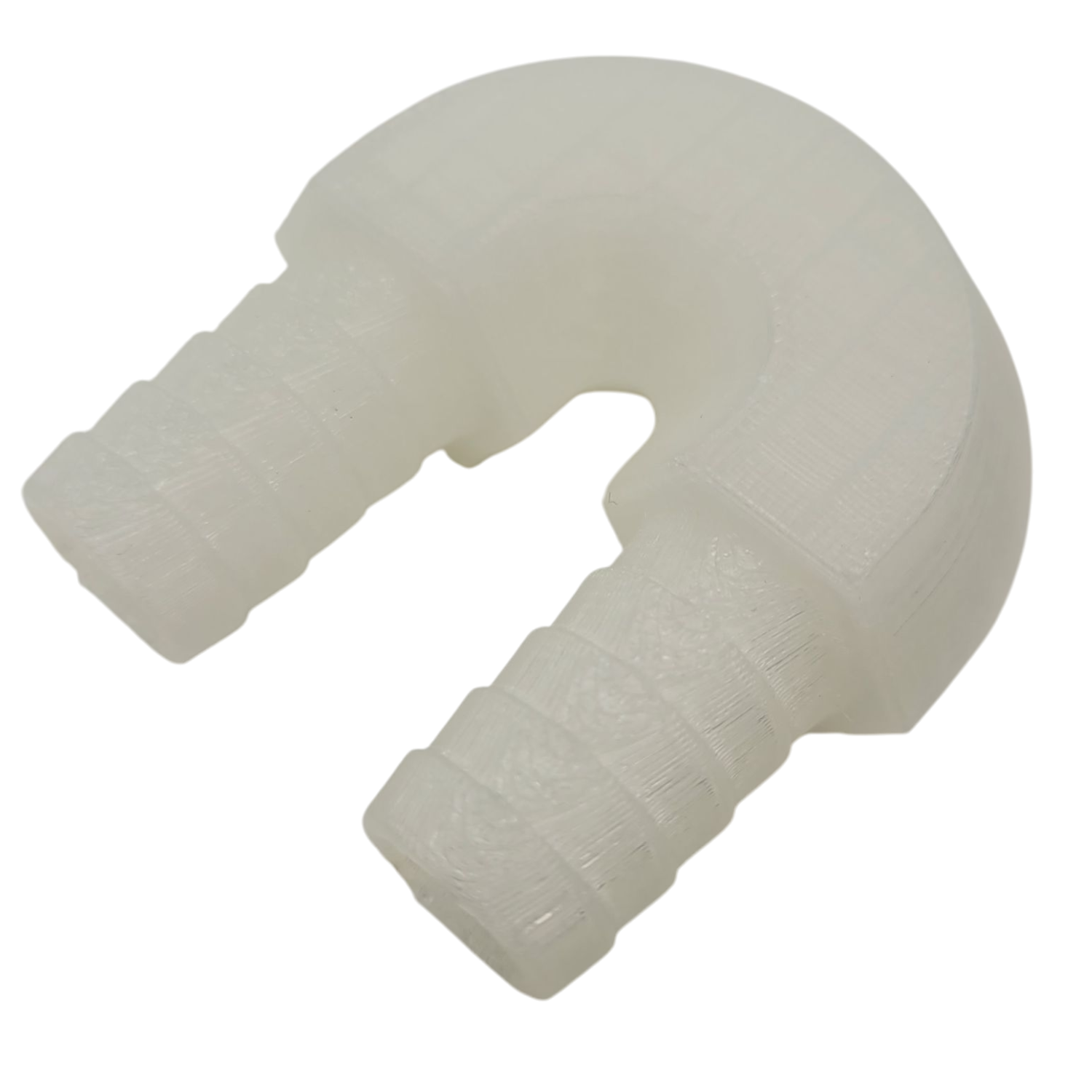
180° Elbow Fitting
Material: PA (Polyamide)
Application Field: Fluid Systems, Automotive
Part Features:
The component is designed to withstand pressure, variable temperatures, and chemically aggressive fluids.
Why PA?
This material has been selected for its high chemical resistance, good rigidity, and thermal stability, making it ideal for demanding fluid and automotive applications.
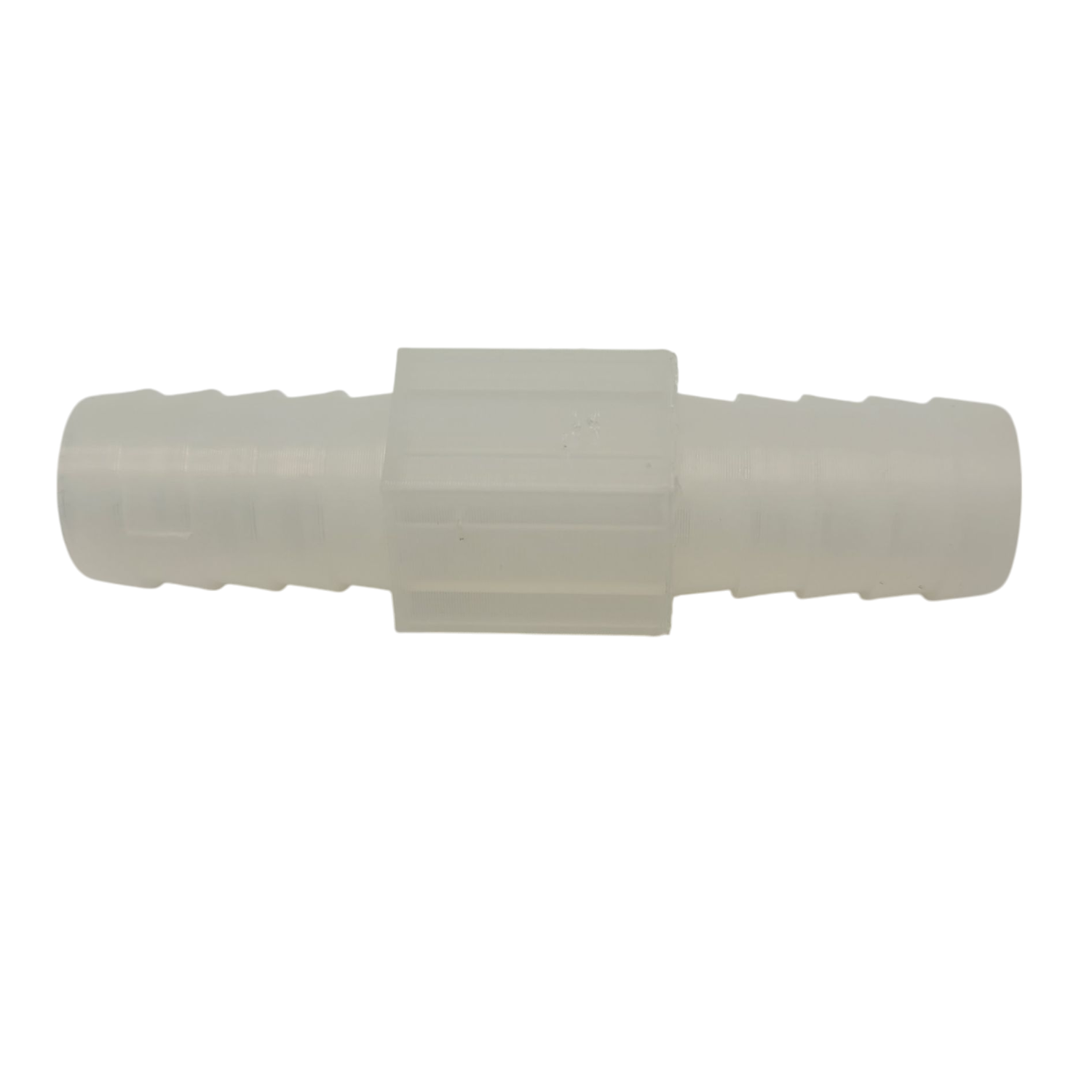
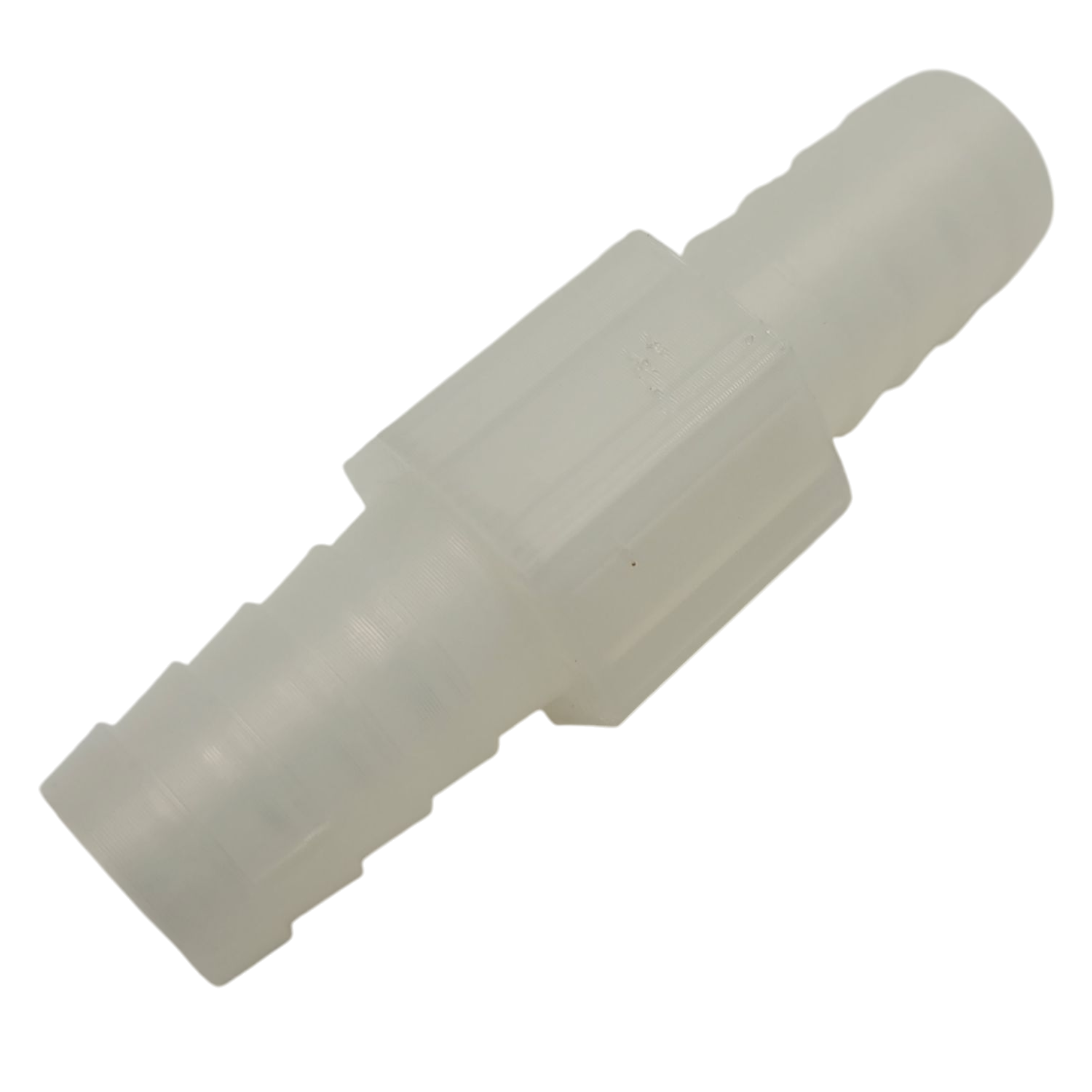
Intake Manifold Fitting
Material: PA (Polyamide)
Application Field: Automotive
Part Features:
The component is designed to ensure leak-proof sealing and to withstand high pressure and elevated temperatures.
Why PA?
This material has been selected for its excellent thermal and chemical resistance, high mechanical strength, and low deformation, making it ideal for demanding automotive applications.
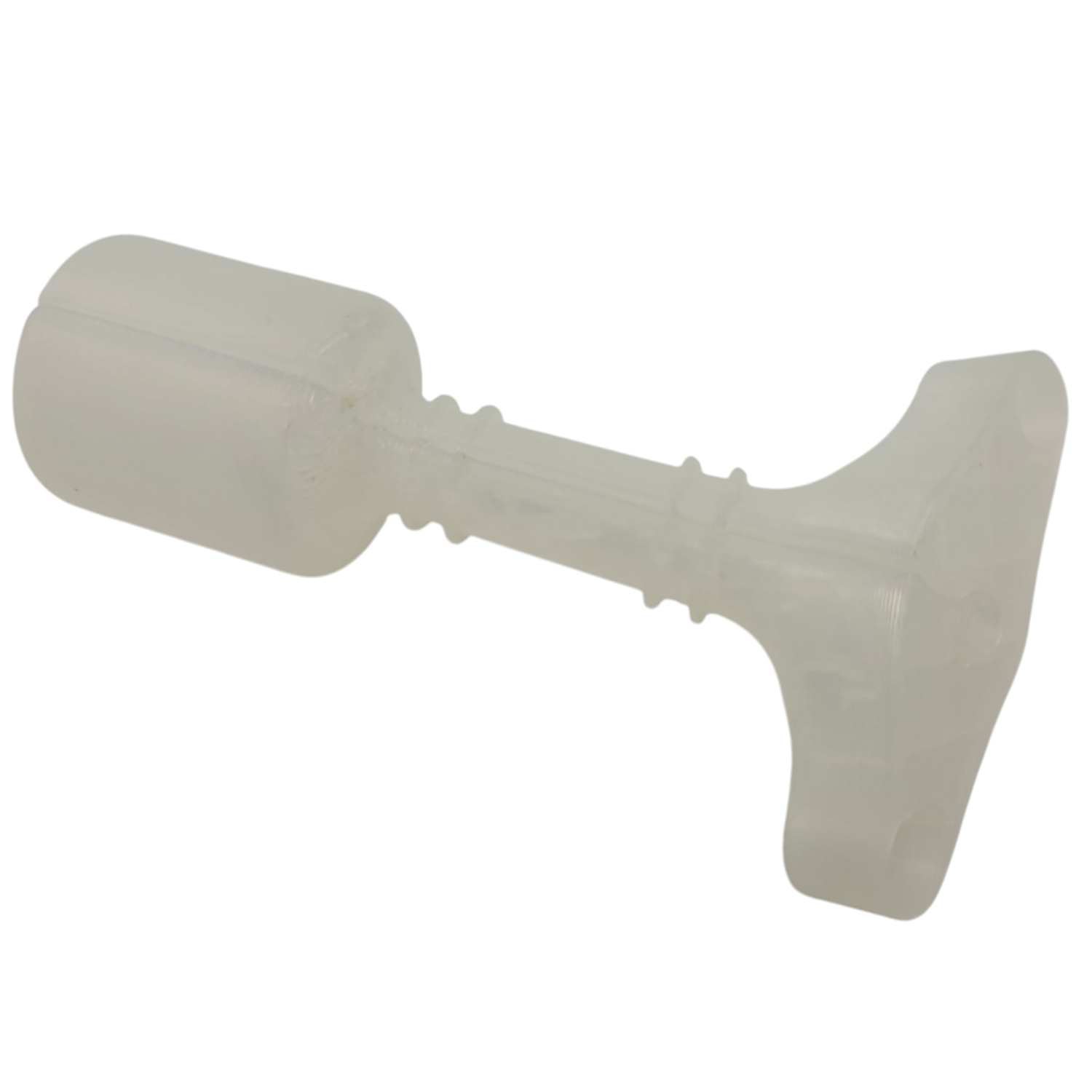
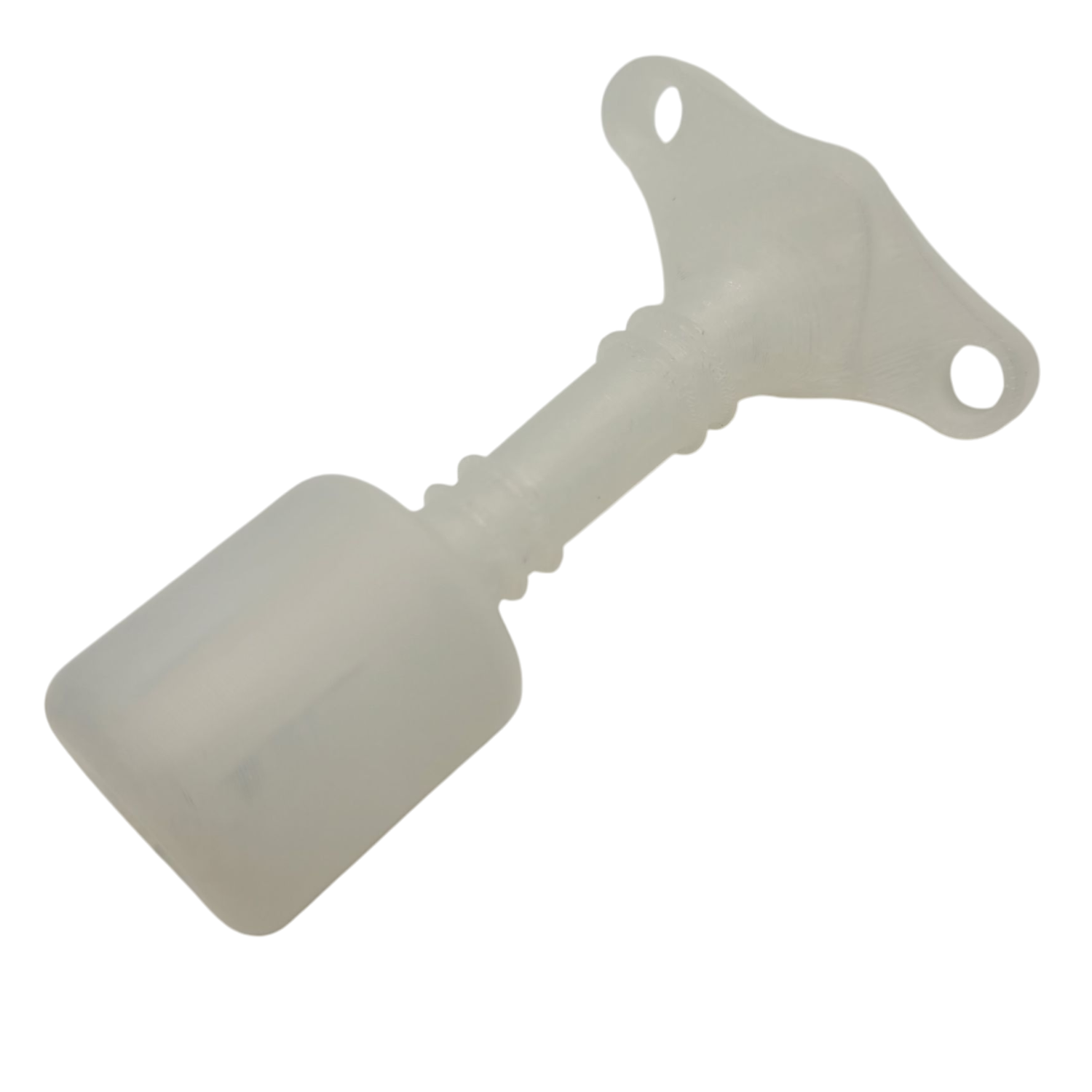
Antenna Bracket
Material: PA (Polyamide)
Application Field: Telecommunications
Part Features:
The component is designed to be lightweight, weather-resistant, and mechanically stable.
Why PA?
This material has been selected for its good impact and environmental resistance, structural stability, and low weight, making it ideal for outdoor and demanding telecommunication applications.
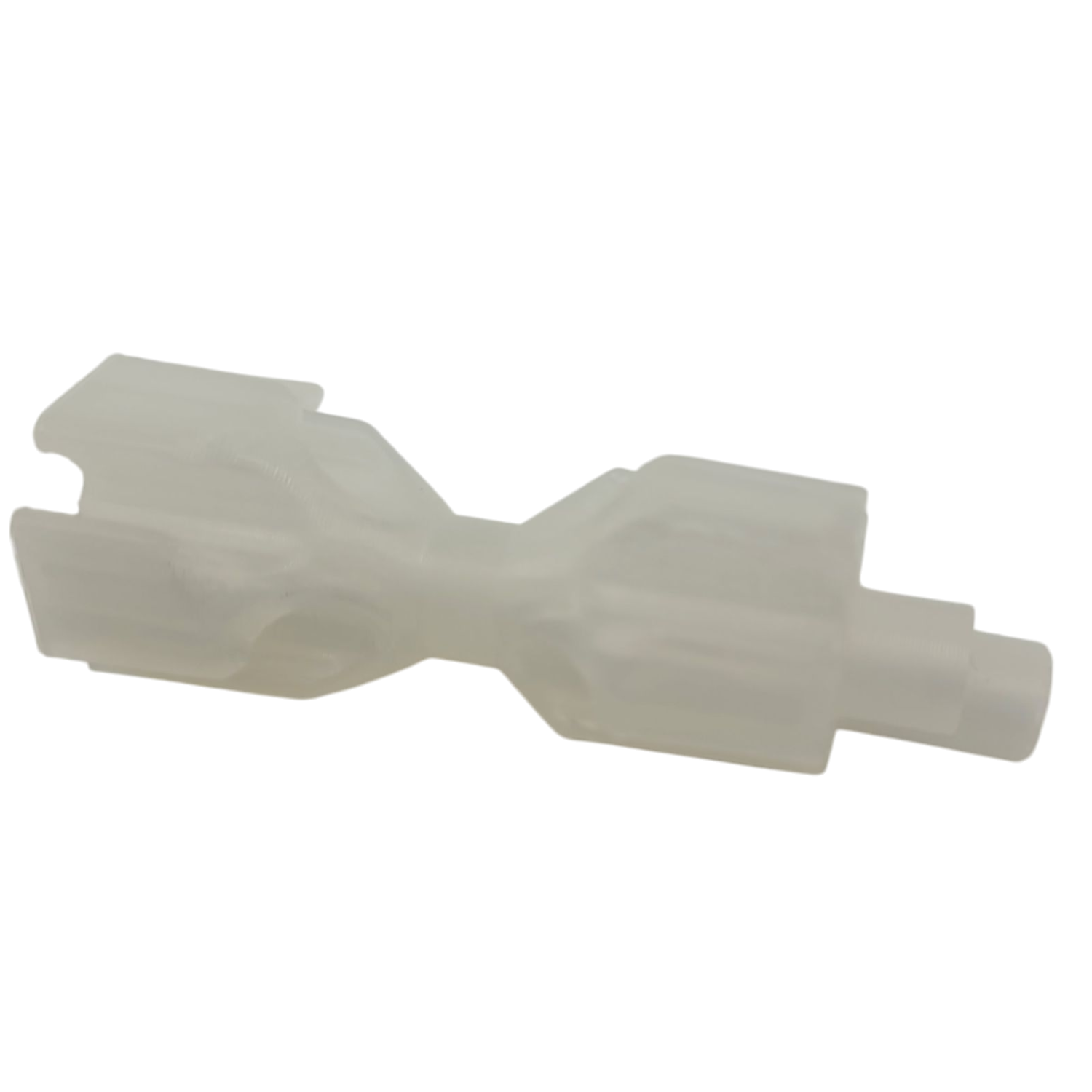
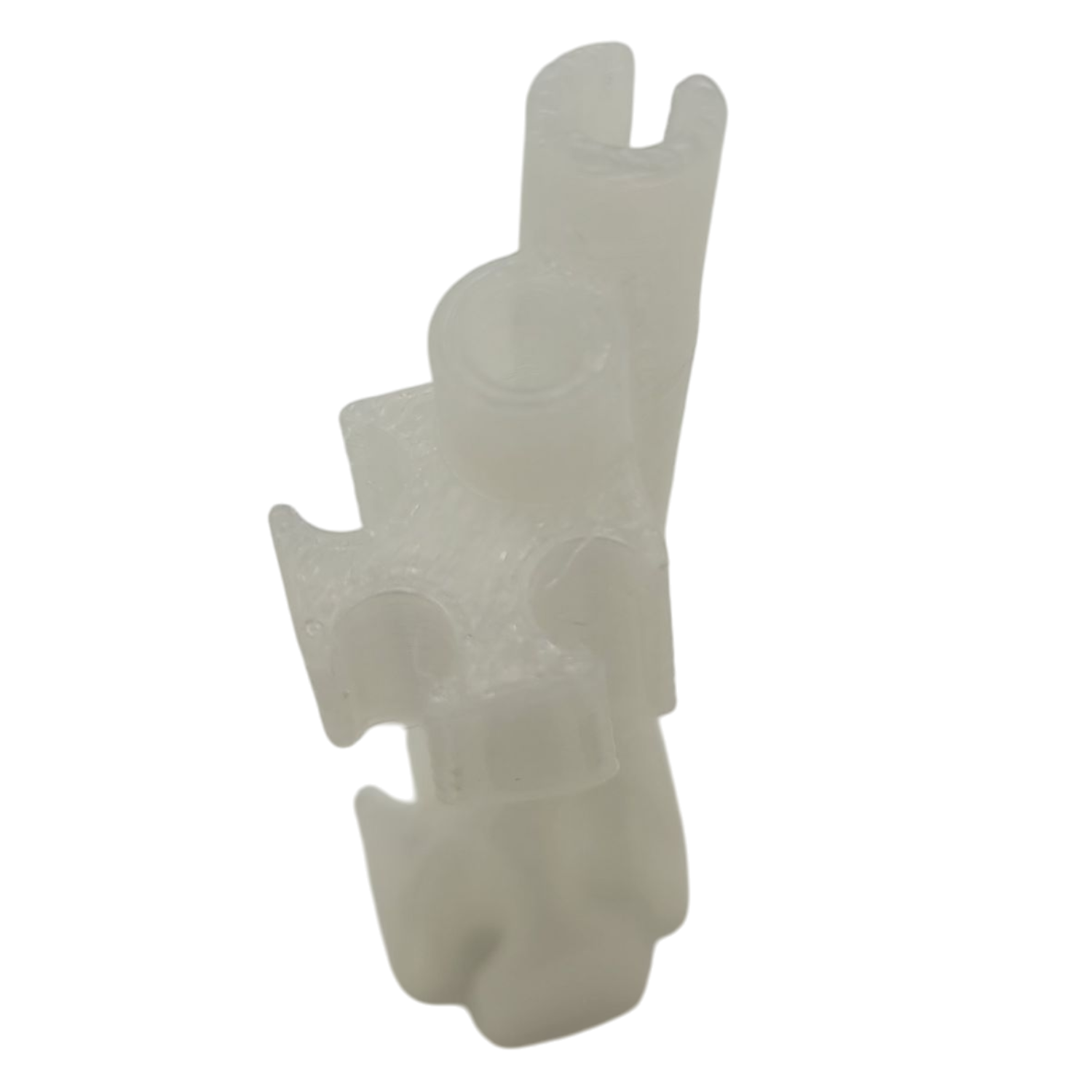
Tube Connector
Material: PA (Polyamide)
Application Field: Fluid Systems, Automotive
Part Features:
The component is designed to ensure a secure connection between pipes, withstanding pressure and technical fluids.
Why PA?
Polyamide has been selected for its high mechanical and chemical resistance, good flexibility, and thermal stability, making it ideal for demanding fluid system applications.
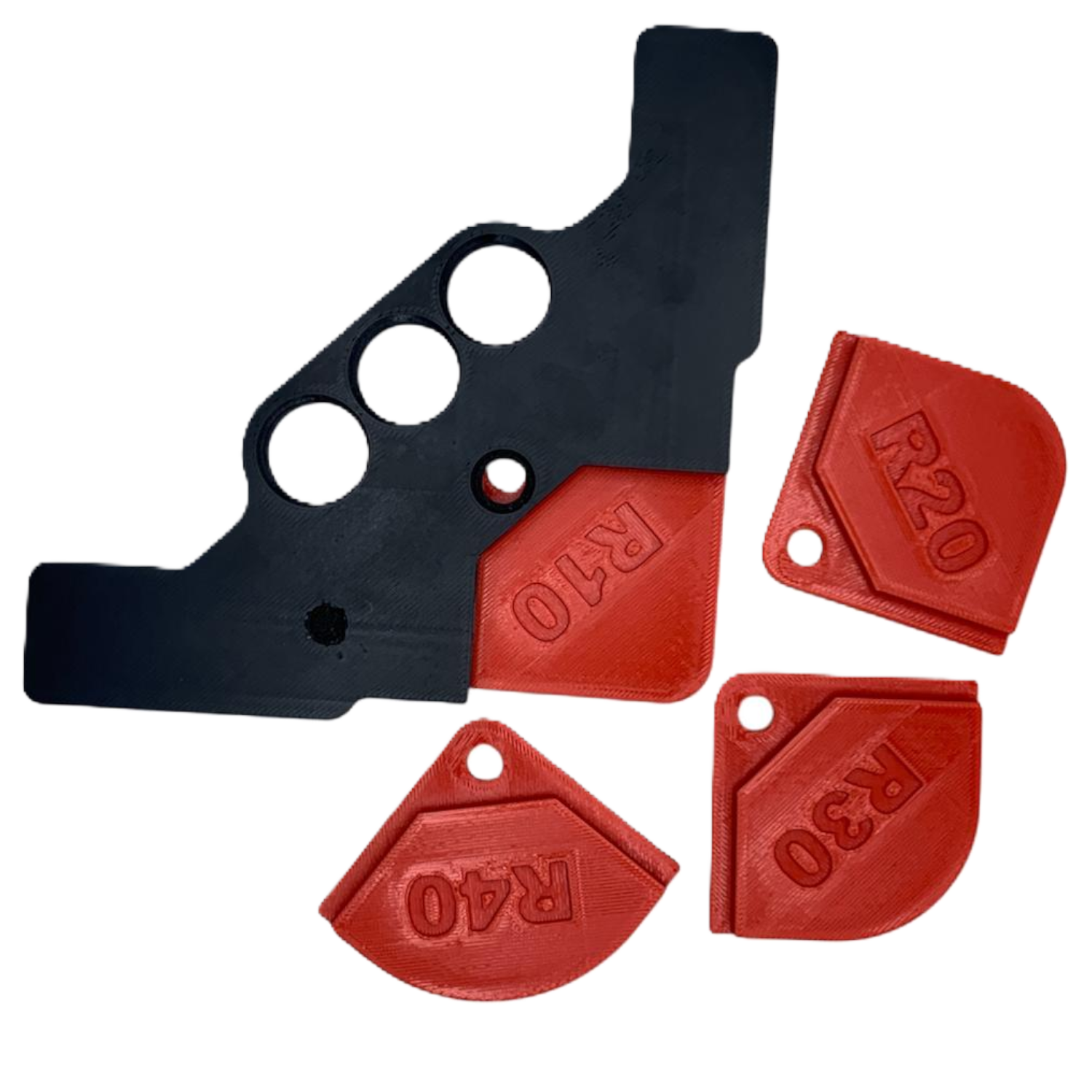
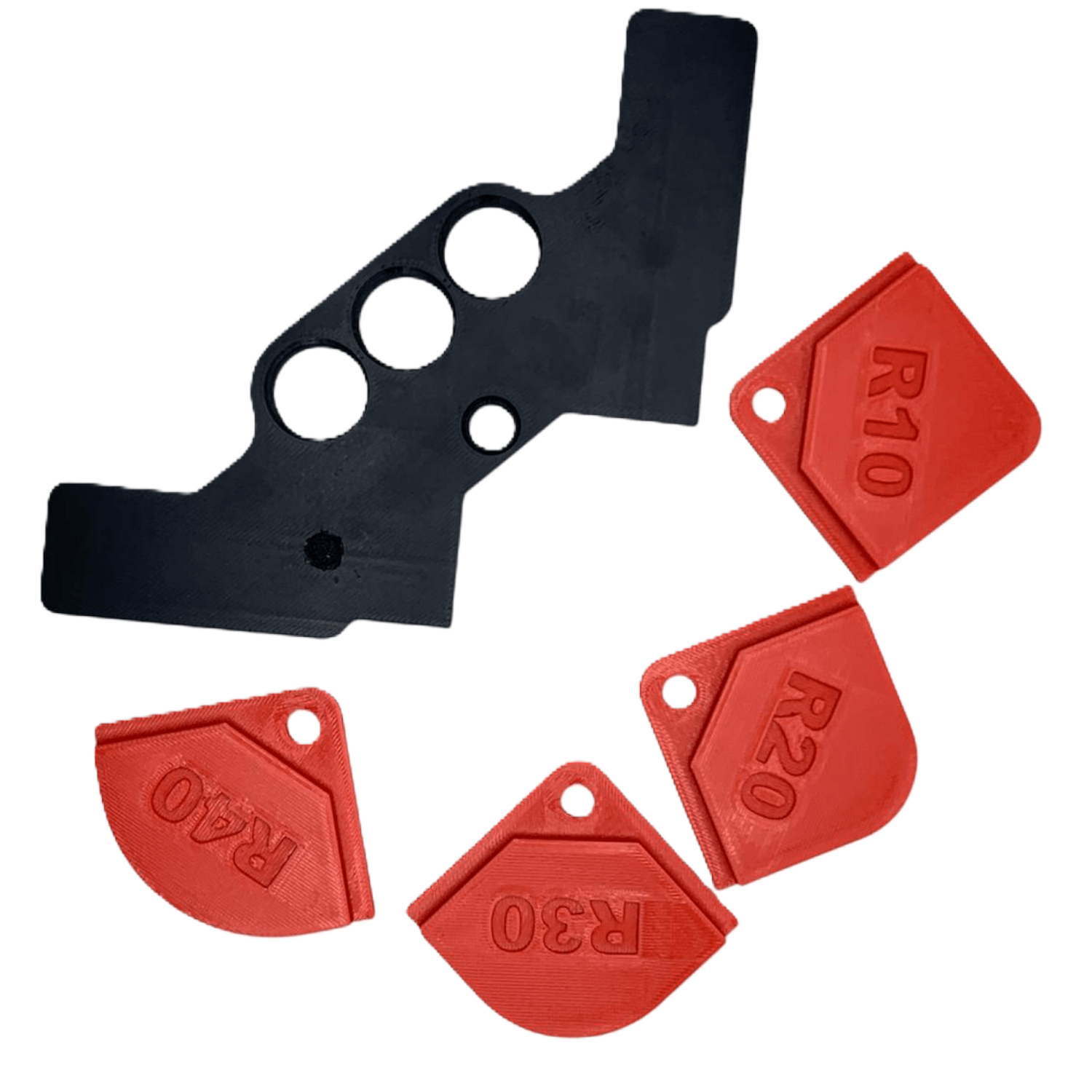
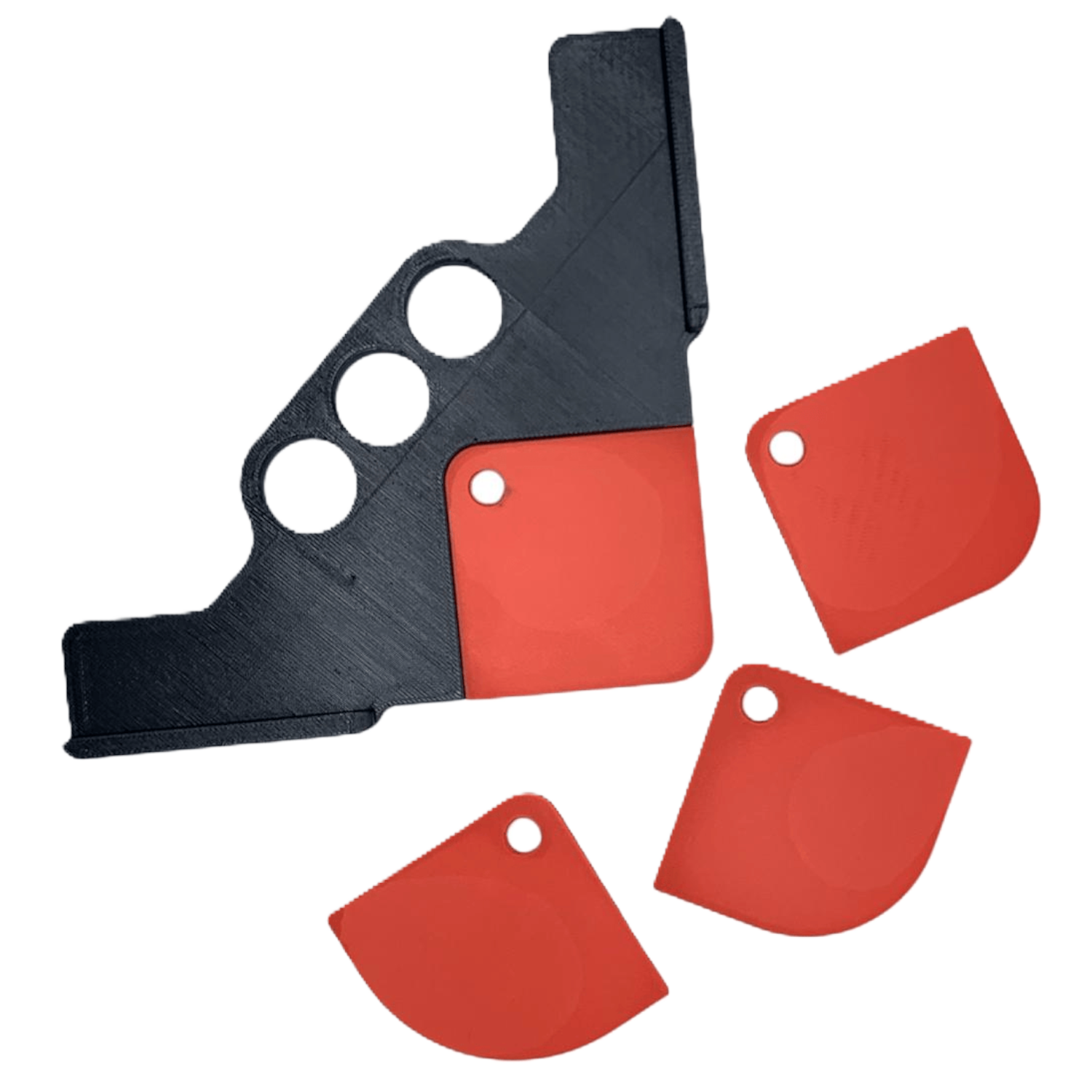
Assembly Jig
Material: ABS + ASA
Application Field: Industrial Production, Assembly, Quality Control
Part Features:
The component is designed to be rigid, impact-resistant, and easily identifiable, thanks to contrasting visible parts that facilitate its use in production and inspection environments.
Why ABS + ASA?
ABS provides good mechanical strength and durability, while red ASA ensures UV stability and long-lasting coloration, making it ideal for measuring tools or components that require clear identification and outdoor resistance.
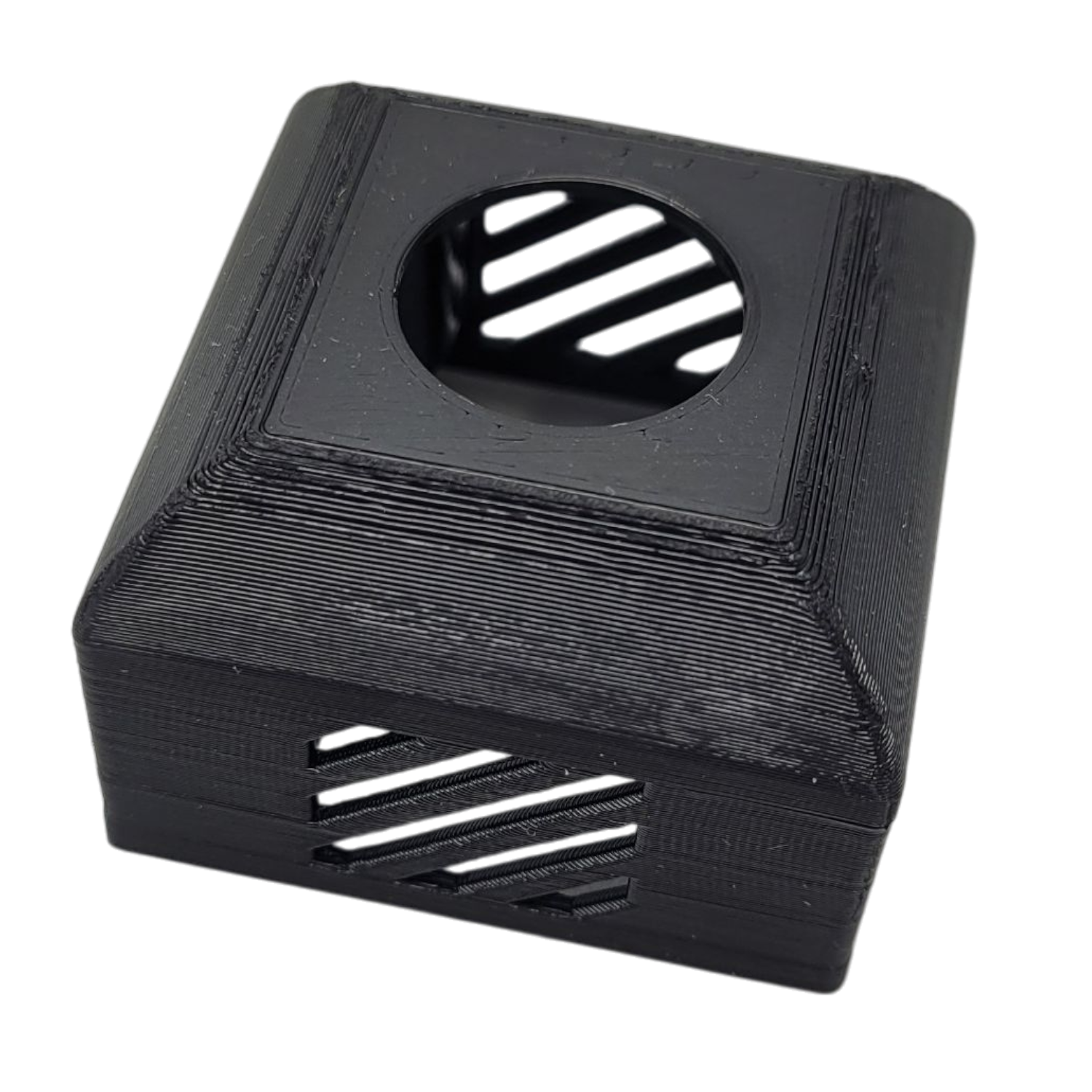
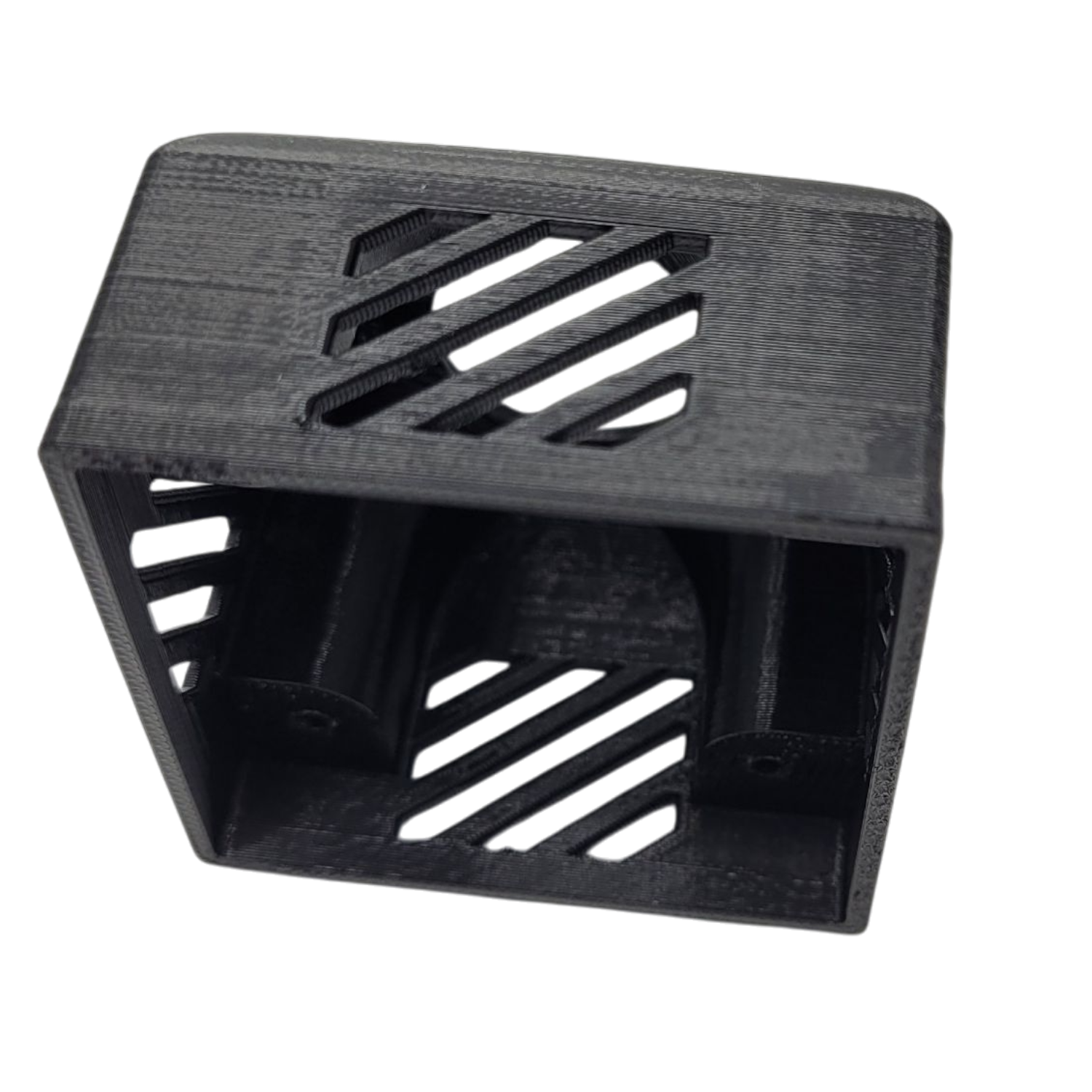
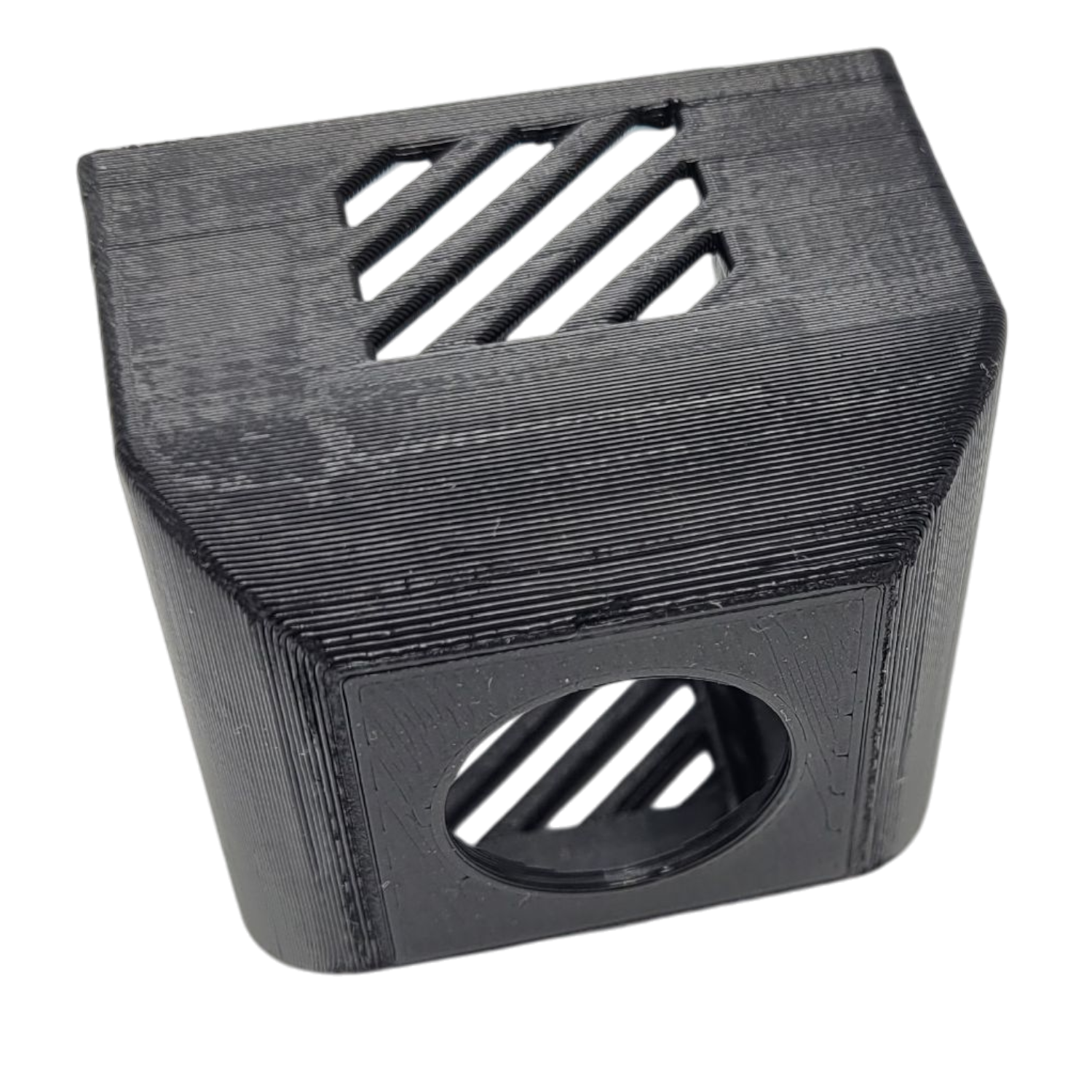
Frame cover
Material: ABS Flame Retardant
Application Field: Maintenance, Industrial Assembly
Part Description:
The component is a frame cover designed to provide structural rigidity and protection during assembly and maintenance operations.
Why ABS Flame Retardant?
Flame-retardant ABS ensures high mechanical strength, dimensional stability, and fire resistance, making it suitable for industrial environments where high safety standards are required.
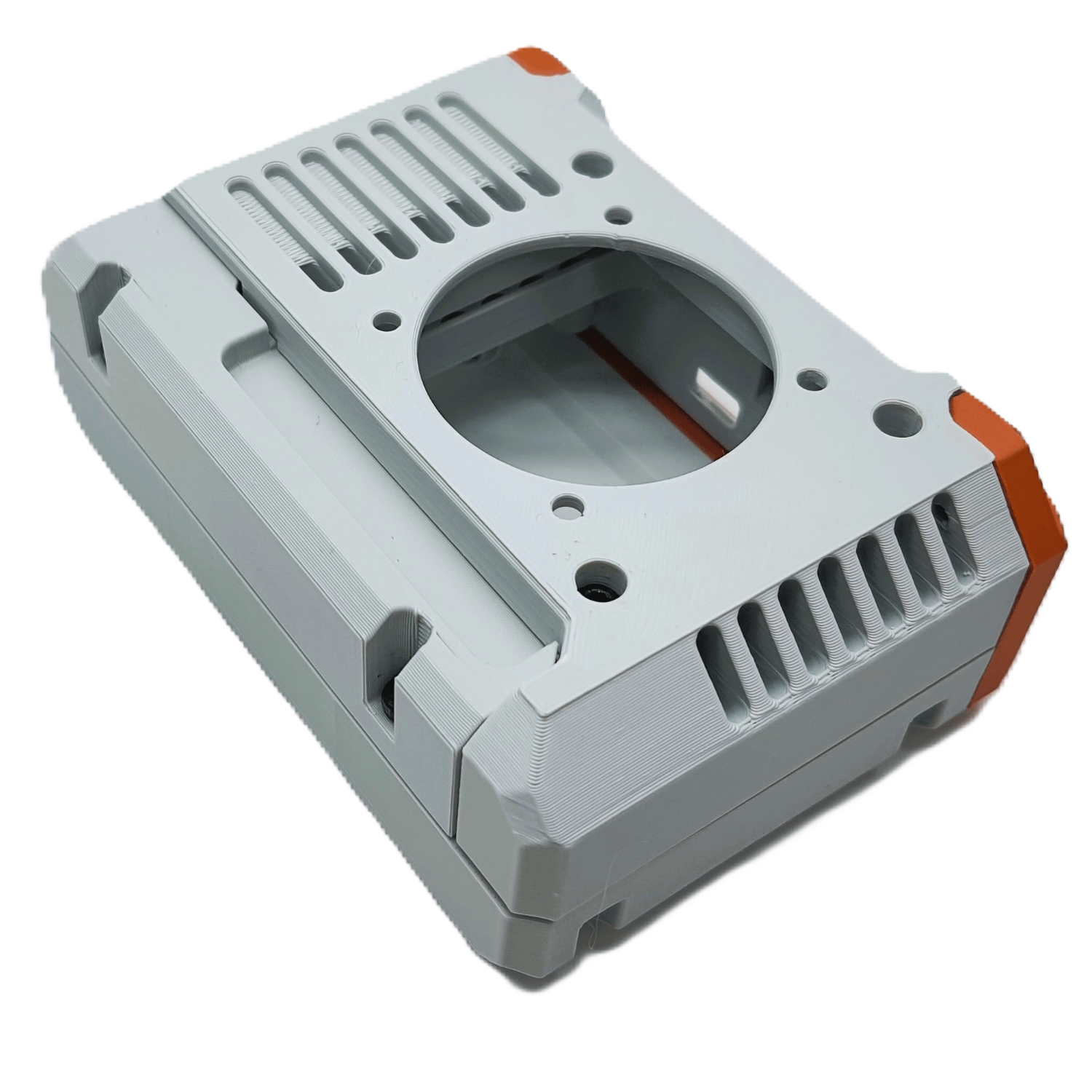
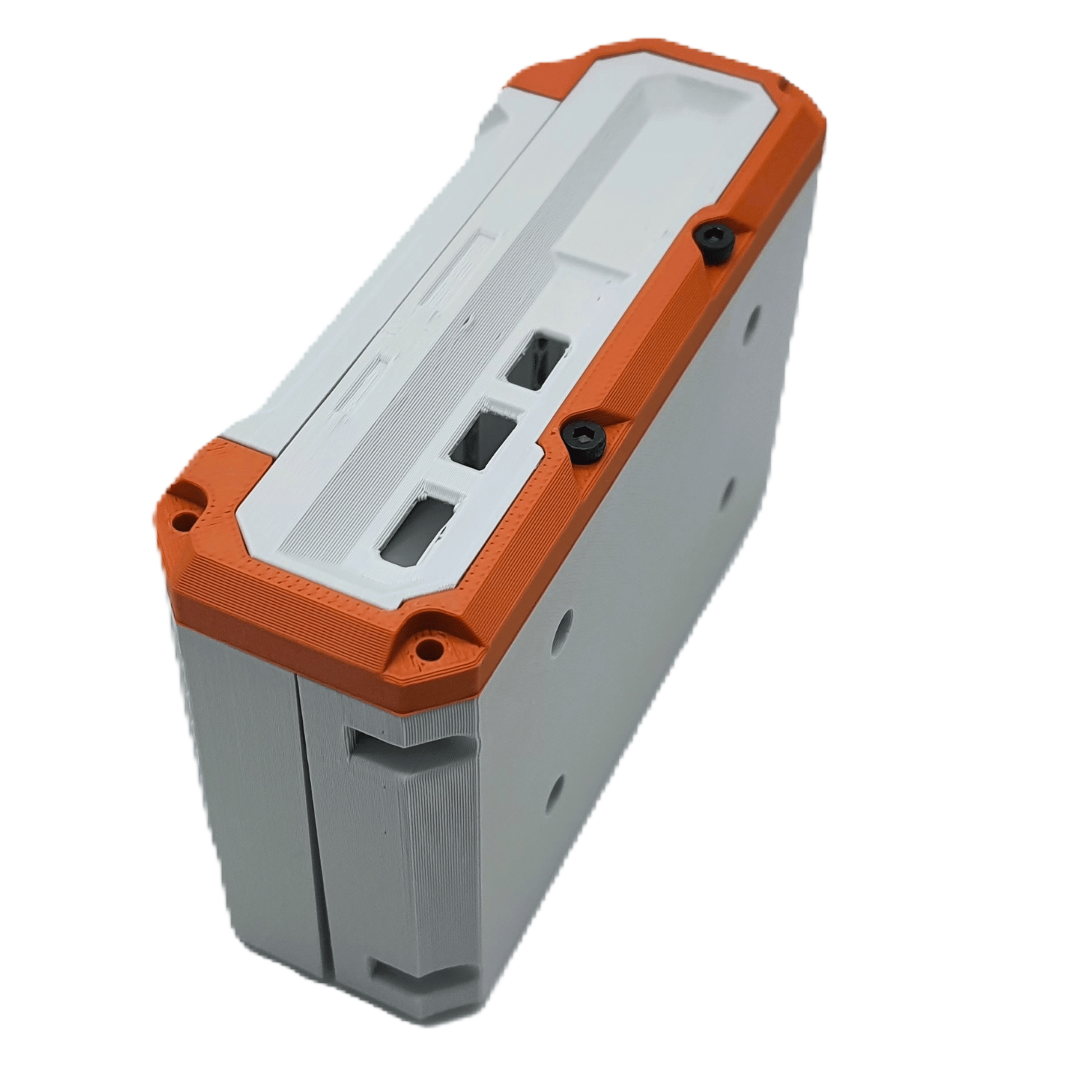
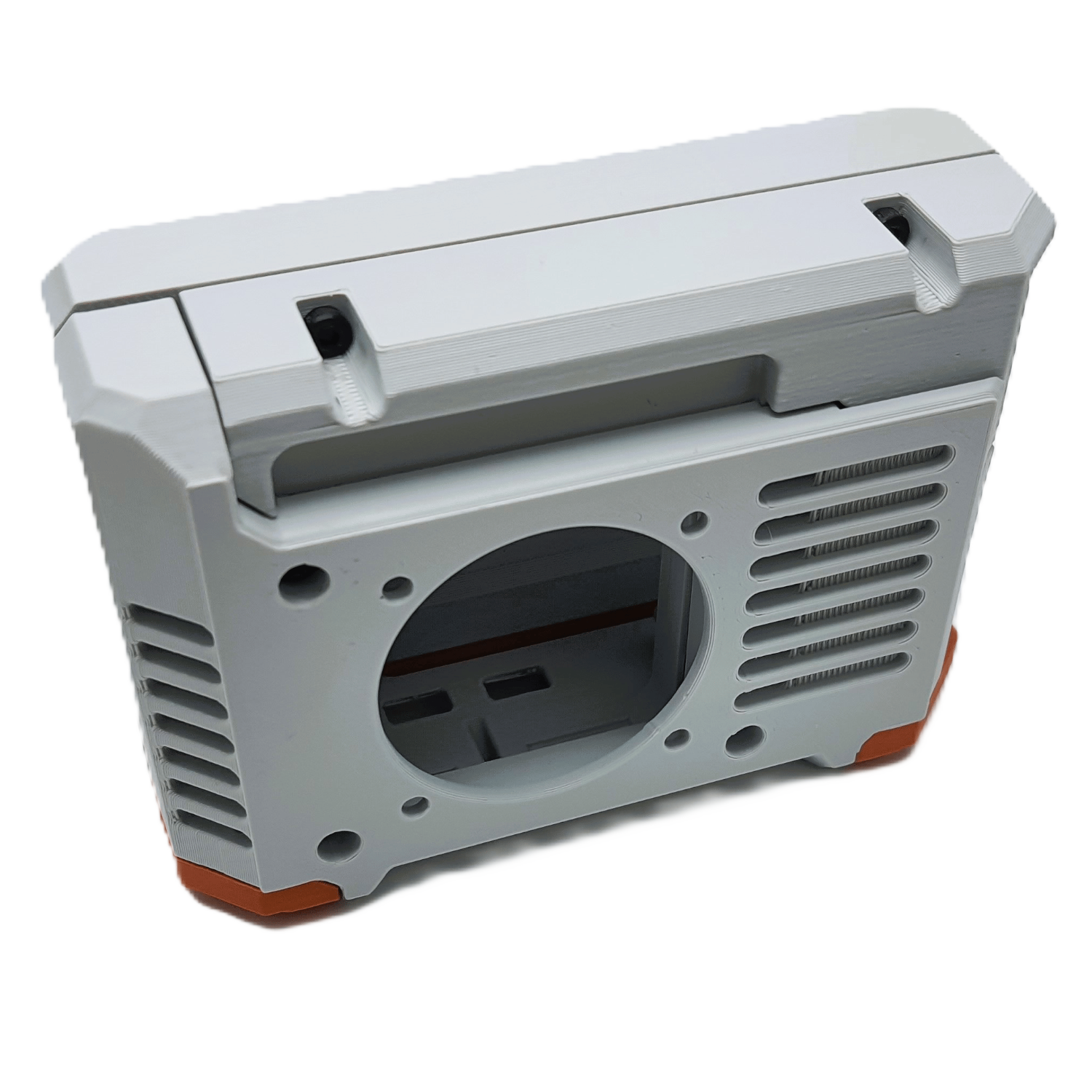
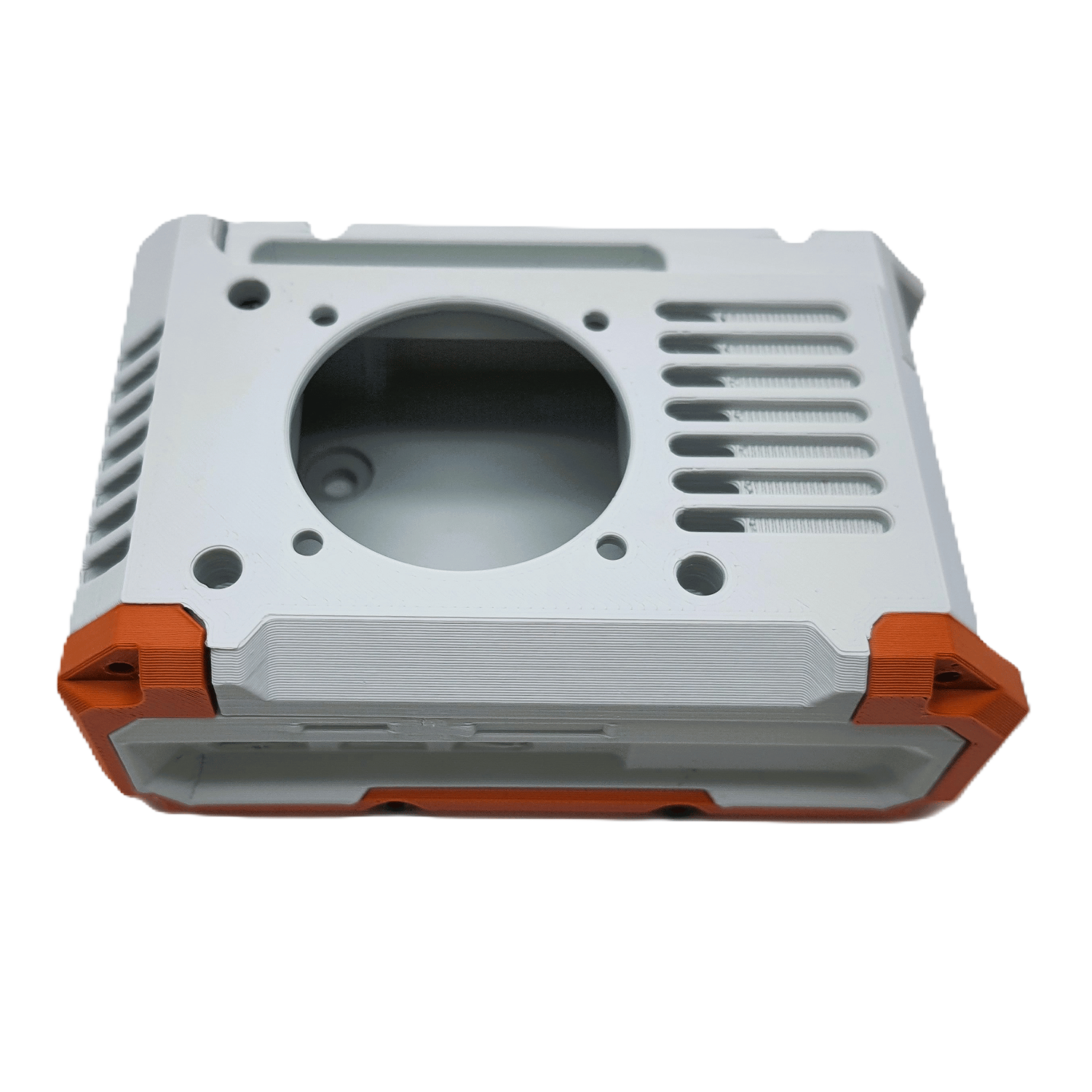
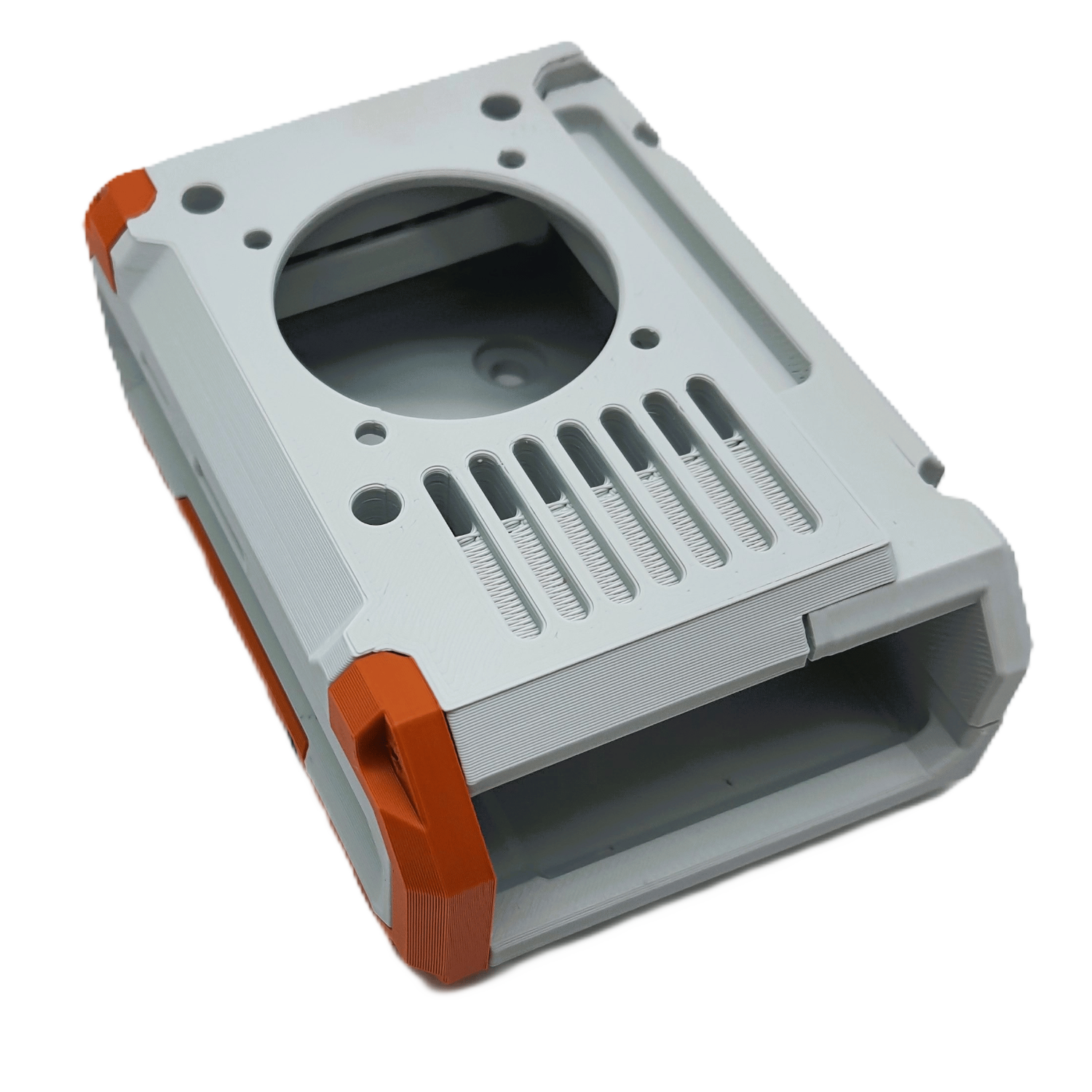
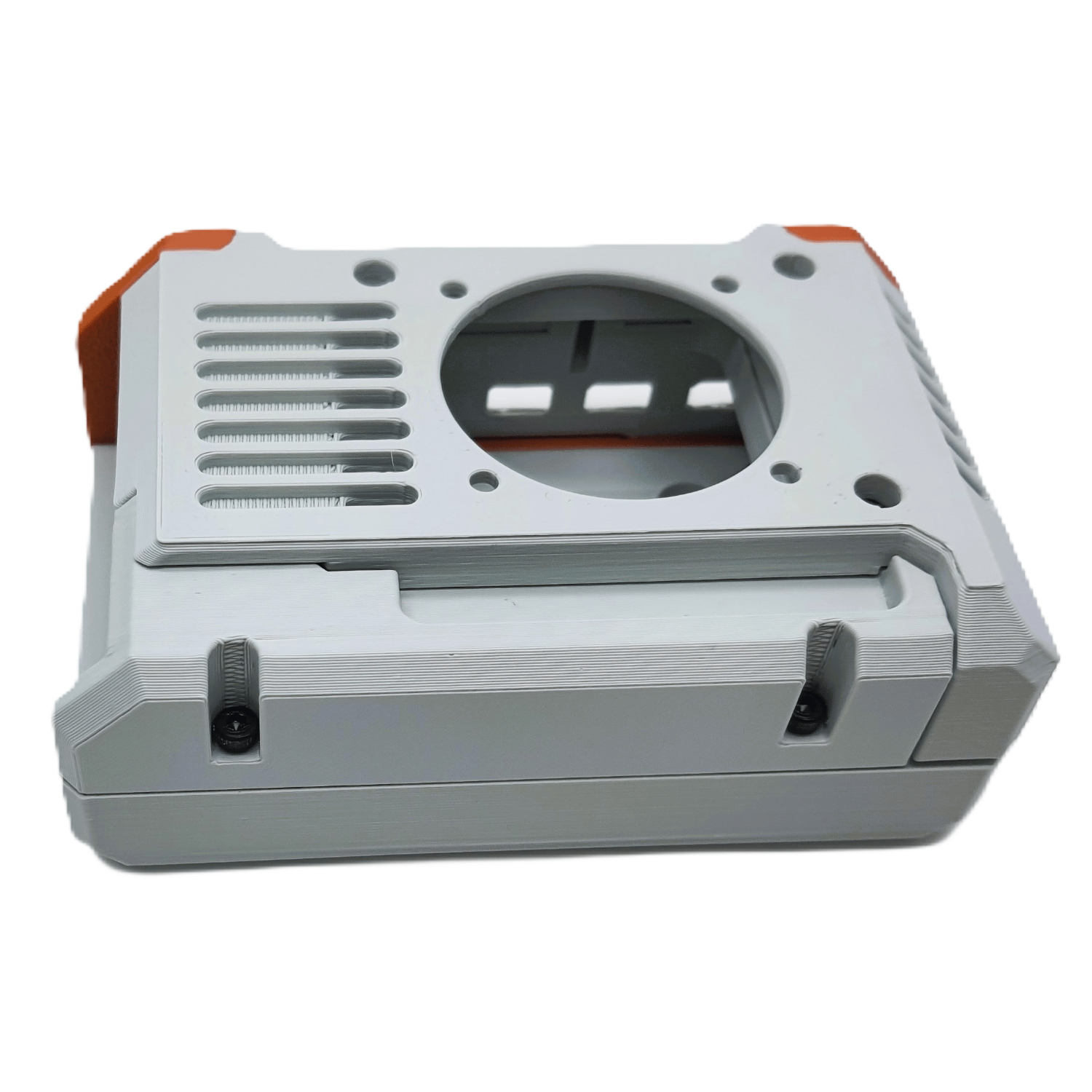
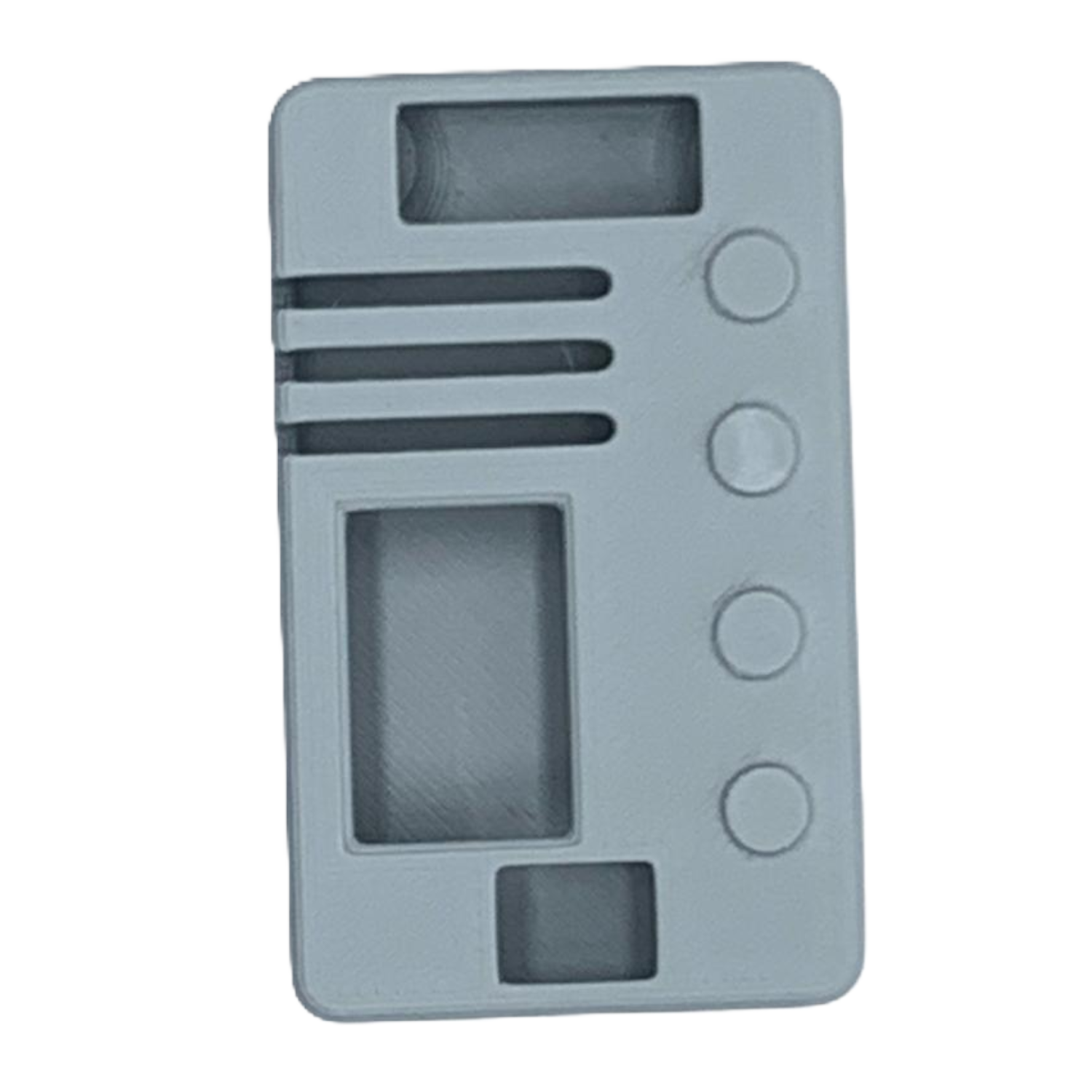
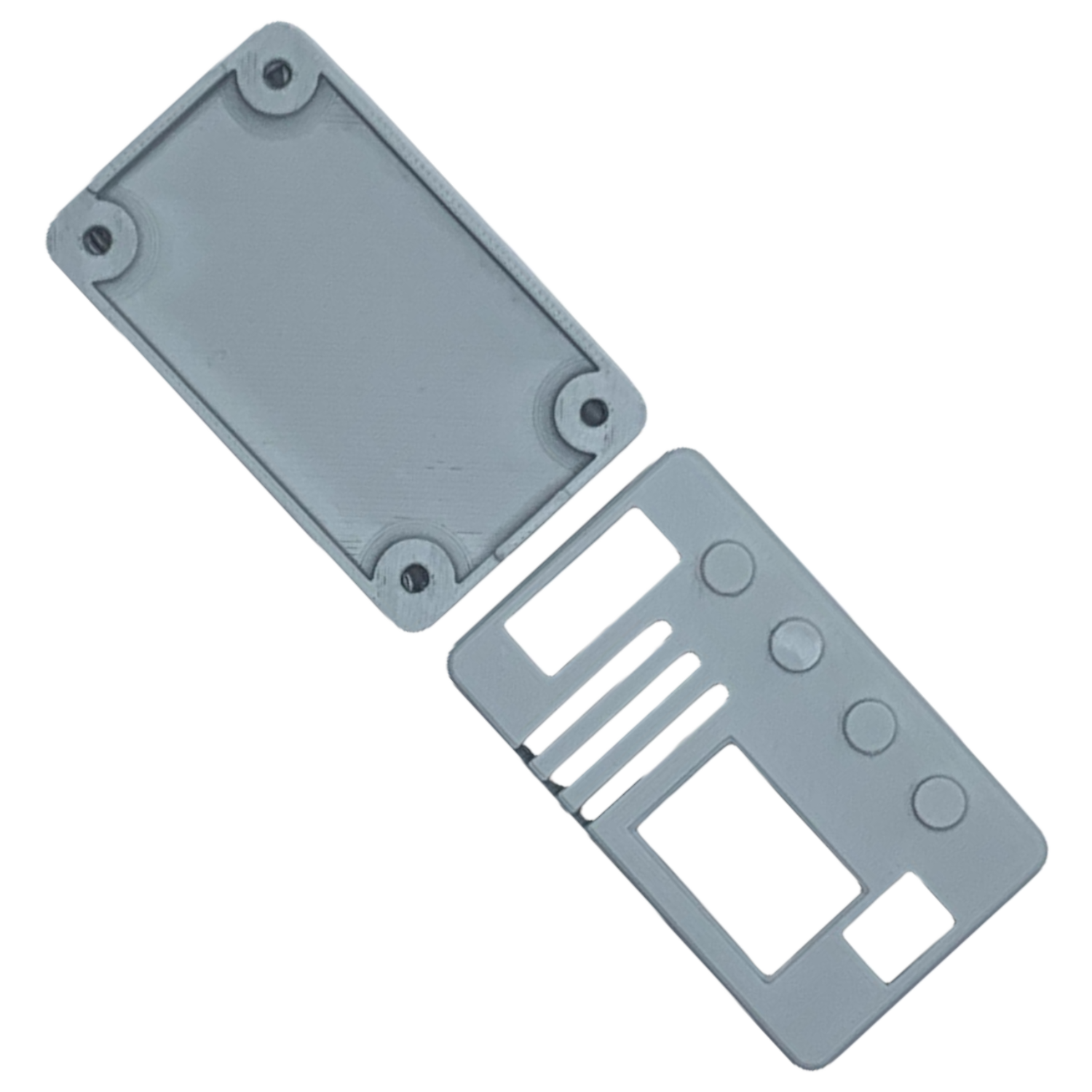
Electronics Enclosure
Material: ABS ESD
Application Field: Electronics
Part Features:
The component is designed to protect electronic boards from impacts and electrostatic discharges (ESD), ensuring safe and reliable operation.
Why ABS ESD?
Chosen for its good mechanical strength, effective electrostatic discharge protection, ease of processing, and long-term durability.
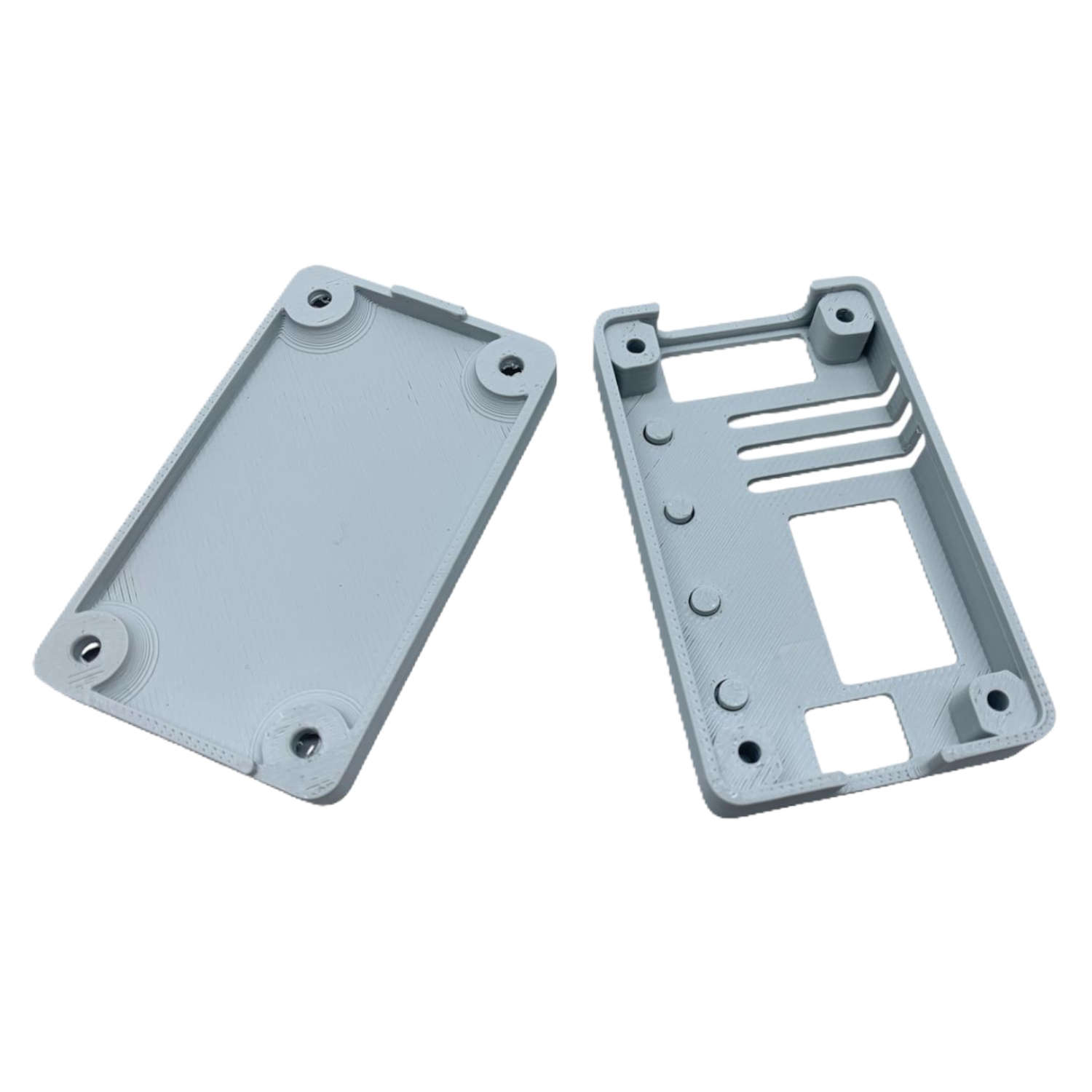
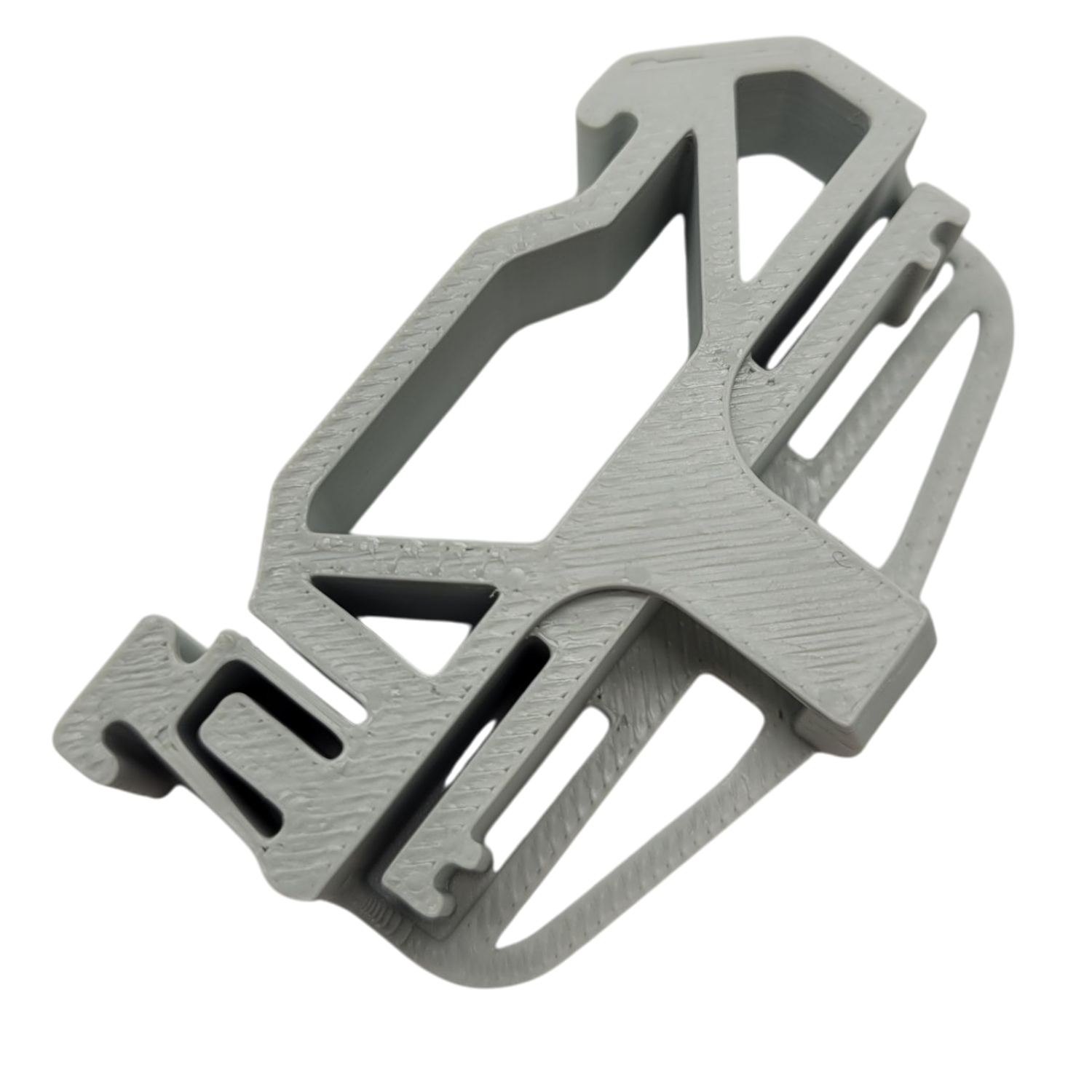
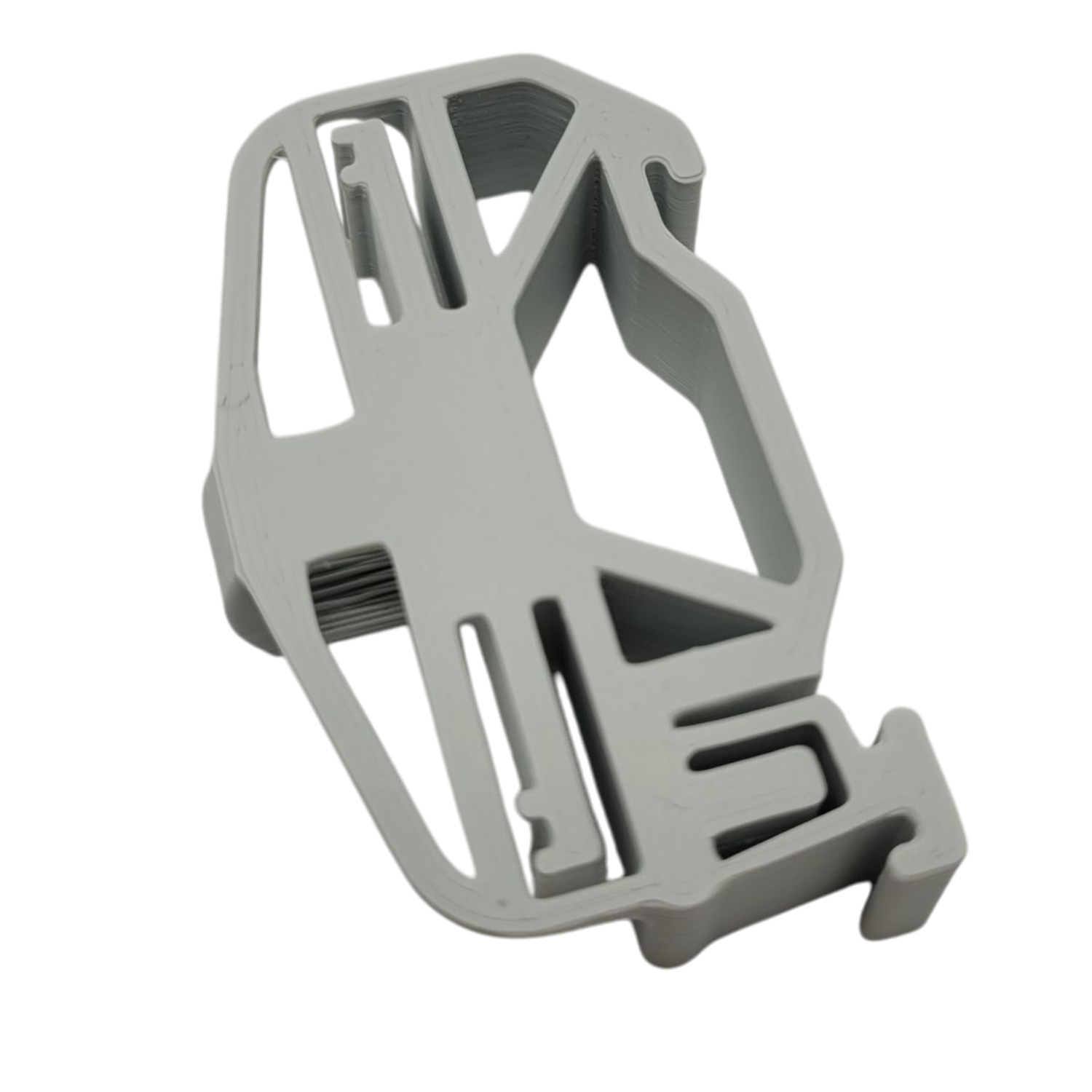
Electronics Housing small
Material: ABS ESD
Application Field: Electronics
Part Features:
The component is designed to protect electronic boards from impacts and electrostatic discharges (ESD), ensuring safe and reliable operation.
Why ABS ESD?
Chosen for its good mechanical strength, effective electrostatic discharge protection, ease of processing, and long-term durability.
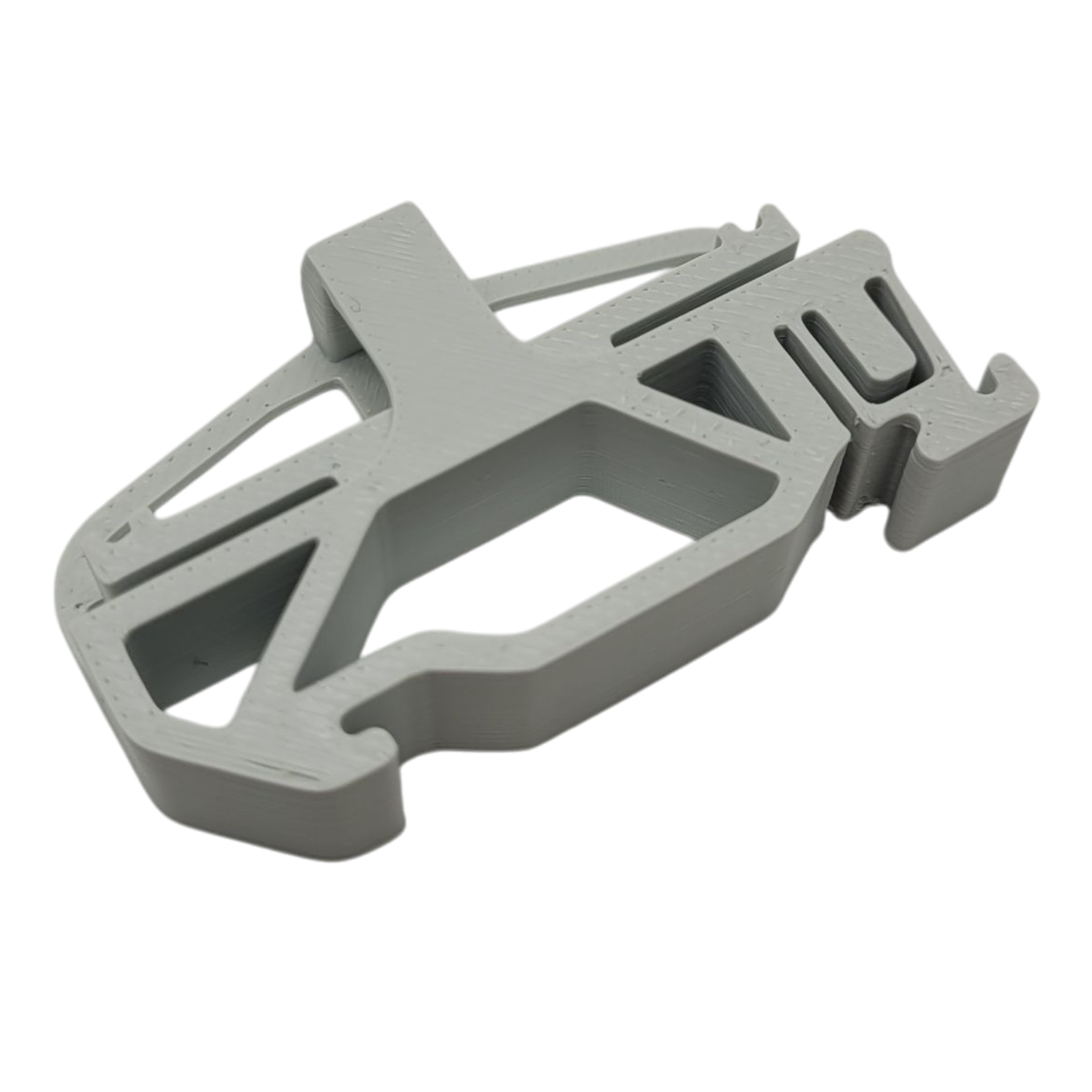
DIN Rail Support
Selected Material: ABS ESD (Electrostatic Discharge)
Application Field: Industry, Automation, Electronics
Part Description:
The component is a DIN rail support made of ABS ESD, designed to ensure effective protection against electrostatic discharges, ideal for securely housing sensitive electronic devices.
Why ABS ESD?
This material offers excellent mechanical rigidity, antistatic protection to prevent damage to electronic components, and impact resistance, while maintaining dimensional stability over time. Perfect for industrial environments where reliable DIN rail mounting is required.
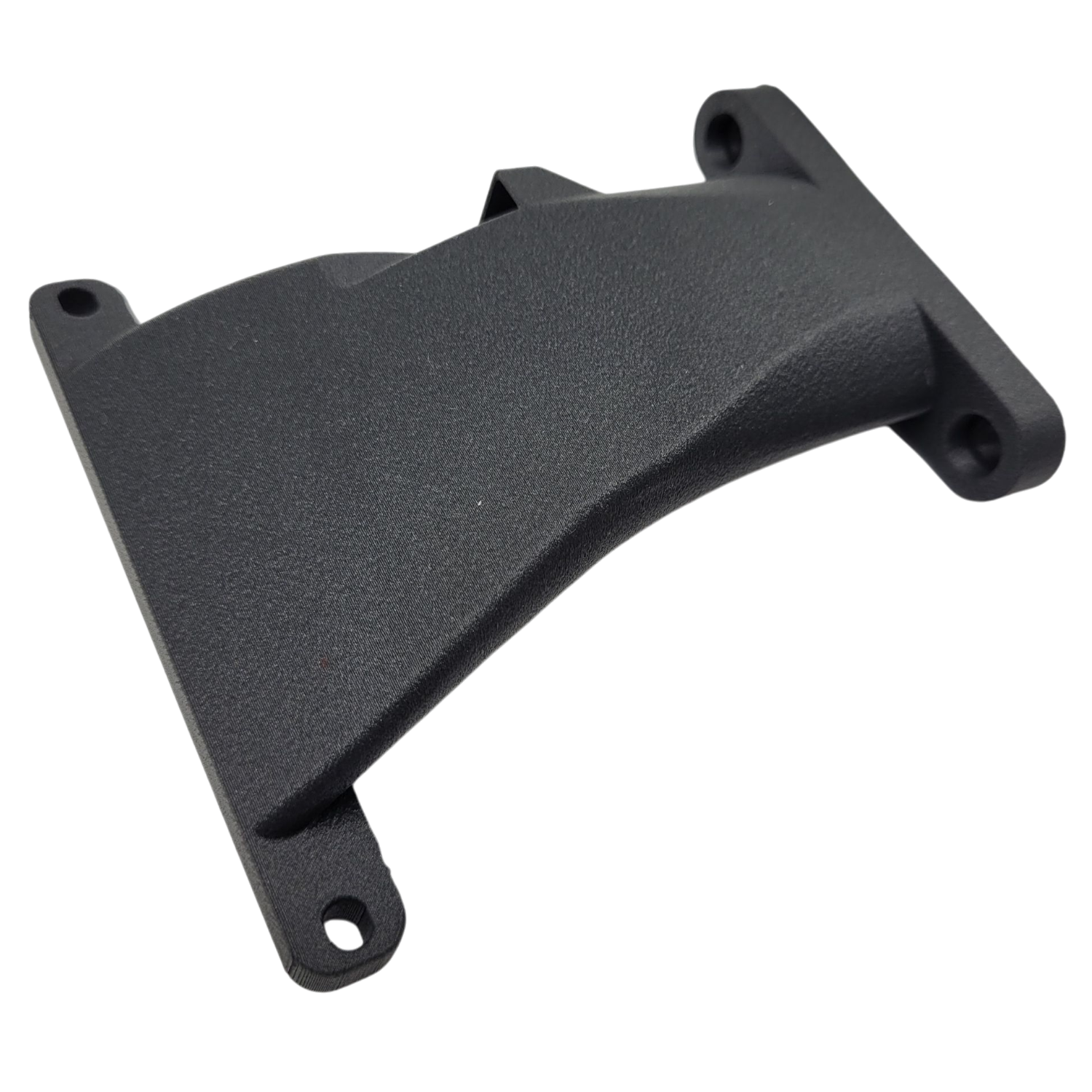
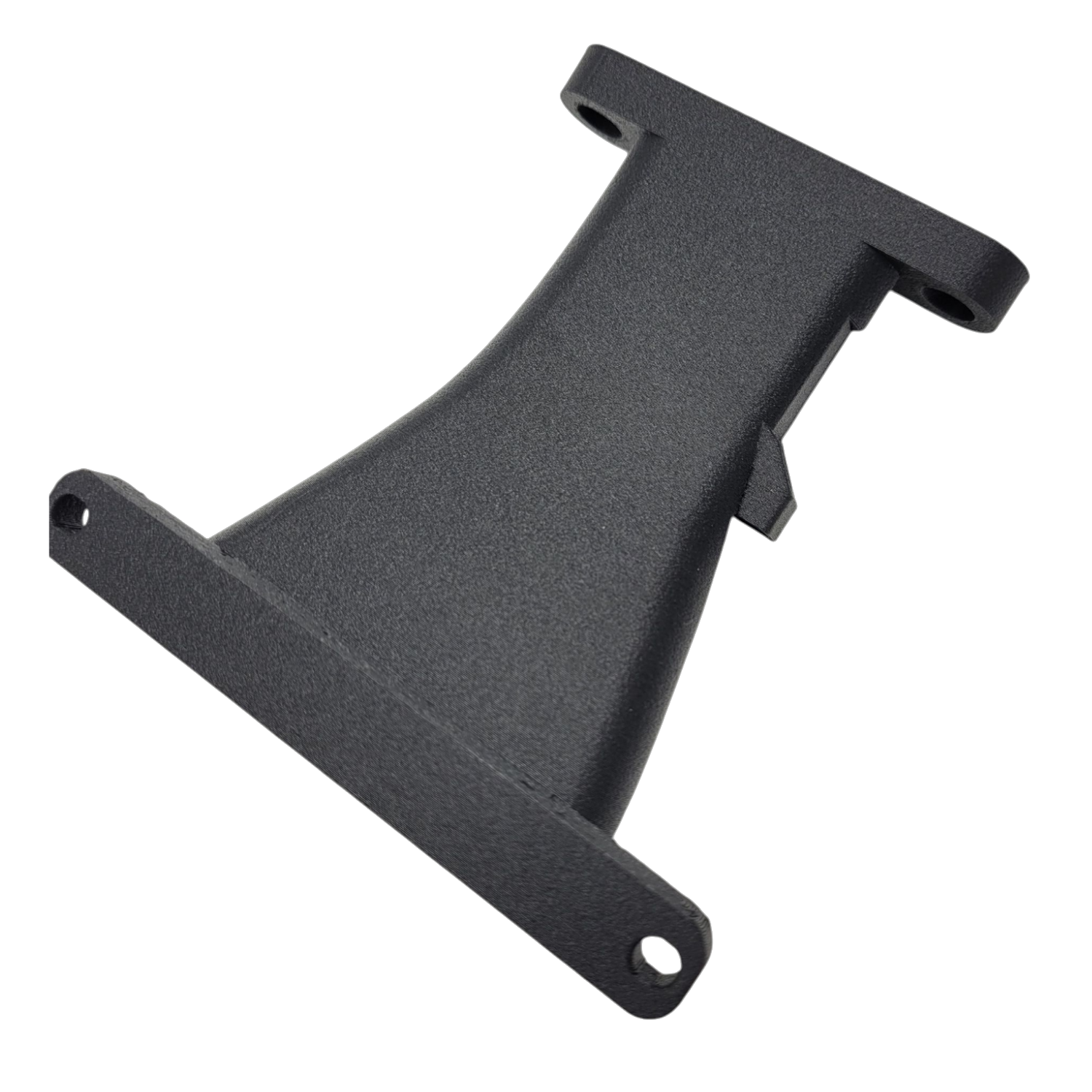
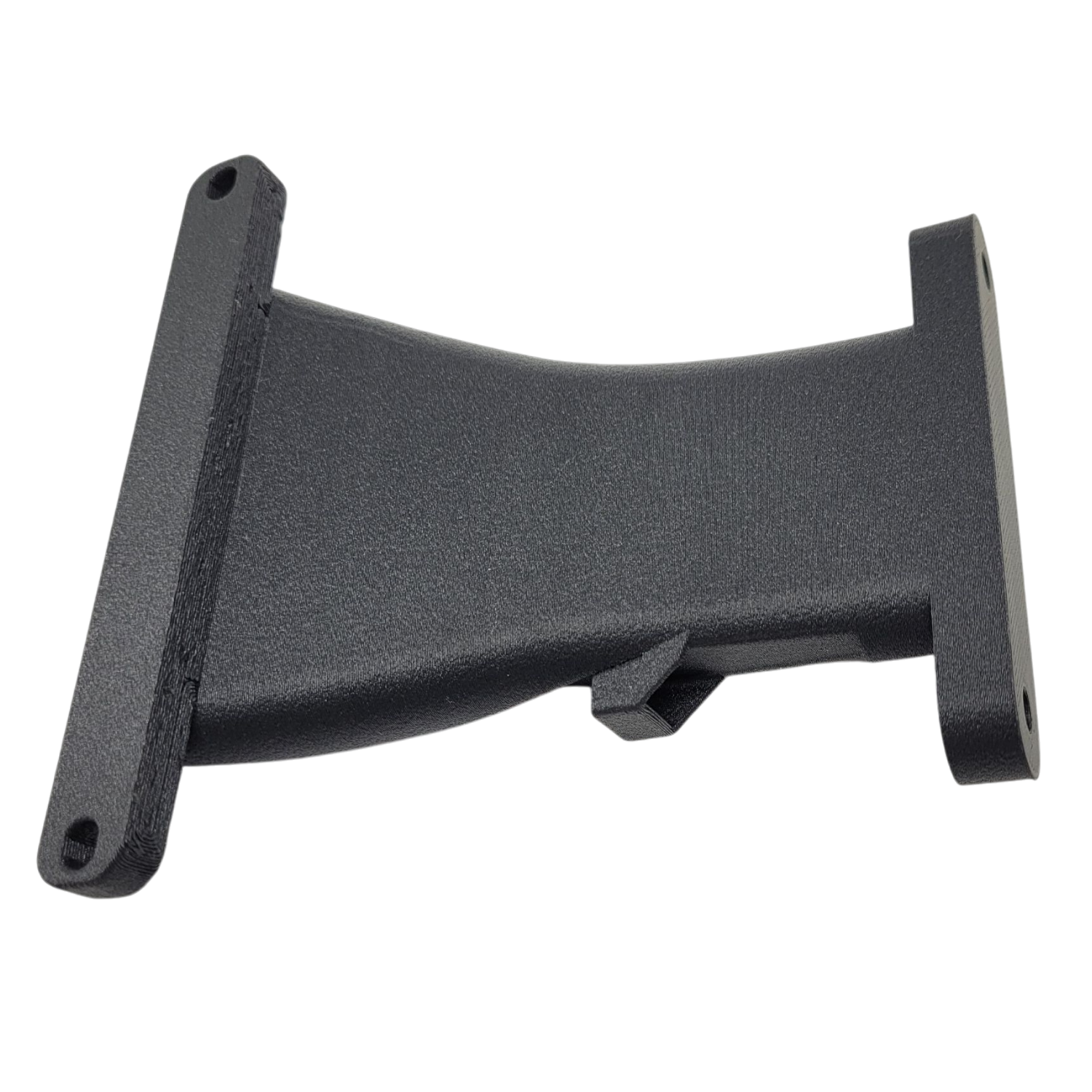
Measuring Instrument Support
Selected Material: PPS (Polyphenylene Sulfide)
Application Field: Measuring instruments, industrial, electronics
Part Description:
The component is a support for measuring instruments, made of PPS to ensure high thermal stability, mechanical rigidity, and chemical resistance. Designed for harsh industrial environments, it offers a safe and durable housing for precision instruments.
Why PPS?
- High thermal resistance: maintains dimensional stability even at elevated temperatures.
- Excellent chemical resistance: withstands aggressive chemicals without degradation.
- Rigidity and stability: ideal for supporting measuring instruments that require precision and reliability.
Request Your Free Print Sample